













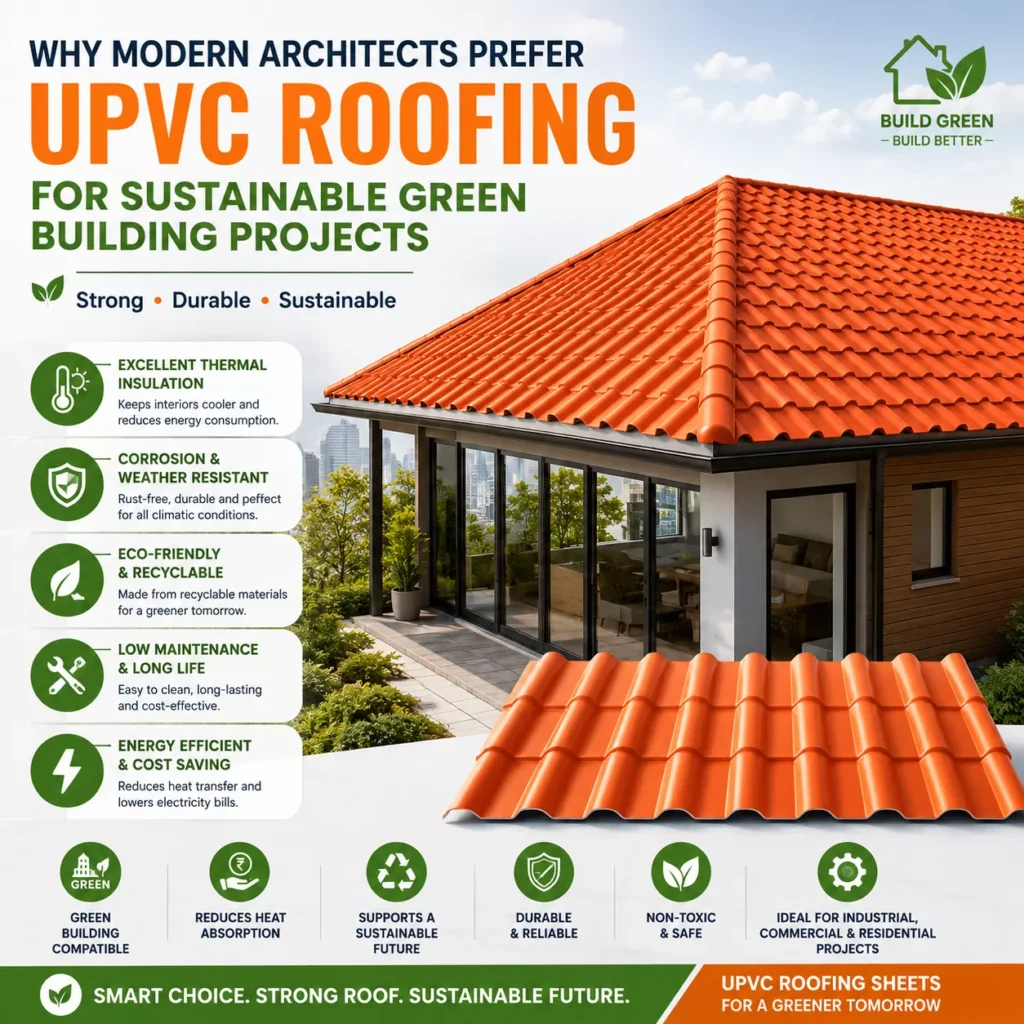
Sustainable construction has become a defining trend in modern architecture as businesses, homeowners, and developers seek environmentally responsible building solutions. Architects today are no longer focused solely on aesthetics and structural integrity—they also prioritize energy efficiency, resource conservation, durability, and long-term operational savings. Among the many innovative roofing materials available, UPVC roofing for sustainable green building projects has emerged as one of the most preferred choices.
UPVC (Unplasticized Polyvinyl Chloride) roofing sheets offer an excellent combination of strength, weather resistance, thermal insulation, and low maintenance. These qualities make them suitable for residential, commercial, agricultural, and industrial buildings that aim to meet modern sustainability standards. Whether used for factories, warehouses, schools, farm buildings, or commercial spaces, UPVC roofing contributes significantly to environmentally friendly construction.
Understanding UPVC Roofing
UPVC roofing sheets are manufactured using rigid polyvinyl chloride without the addition of plasticizers. This results in a strong, lightweight, and highly durable roofing material capable of withstanding harsh environmental conditions. Unlike conventional metal roofing, UPVC does not rust, corrode, or deteriorate when exposed to moisture, chemicals, or coastal environments.
Available in various profiles, colors, and thicknesses, UPVC roofing sheets provide architects with design flexibility while ensuring reliable long-term performance.
Growing Importance of Sustainable Green Buildings
Green buildings are developed to minimize environmental impact throughout their entire lifecycle.
They emphasize efficient use of energy, water, materials, and natural resources while providing healthy indoor environments for occupants.
Modern architects choose building materials that help achieve sustainability objectives such as:
- Lower energy consumption
- Reduced greenhouse gas emissions
- Longer building lifespan
- Minimal maintenance
- Improved indoor comfort
- Reduced construction waste
- Better resource efficiency
UPVC roofing supports each of these goals, making it an essential material in sustainable construction.
Excellent Thermal Insulation
One of the biggest reasons architects prefer UPVC roofing is its superior thermal insulation performance. Conventional metal roofs absorb and transfer a significant amount of heat into the building, increasing indoor temperatures and energy consumption.
UPVC roofing sheets have lower thermal conductivity, helping reduce heat transfer from the roof into interior spaces. Buildings remain cooler during hot weather, reducing dependence on air-conditioning systems.
Improved thermal performance results in:
- Lower electricity consumption
- Reduced cooling costs
- Comfortable indoor temperatures
- Enhanced occupant productivity
These energy-saving benefits contribute directly to green building certification requirements.
Superior Weather Resistance
Buildings must withstand changing weather conditions for decades. UPVC roofing is engineered to resist:
- Heavy rainfall
- Intense sunlight
- High humidity
- Strong winds
- UV radiation
- Temperature fluctuations
Unlike traditional roofing materials, UPVC does not rust, peel, or crack due to weather exposure. This long-term durability reduces the need for frequent repairs or replacements, conserving both materials and financial resources.
Corrosion-Free Performance
Industrial environments often expose roofing materials to chemicals, moisture, and corrosive gases. Metal roofing may gradually deteriorate under such conditions.
UPVC roofing provides outstanding corrosion resistance, making it particularly suitable for:
- Chemical industries
- Fertilizer plants
- Food processing facilities
- Poultry farms
- Dairy farms
- Coastal buildings
- Industrial warehouses
Architects appreciate this reliability because it significantly extends the service life of the building envelope.
Lightweight Construction
Reducing structural load is another important consideration in sustainable design.
UPVC roofing sheets are much lighter than many conventional roofing materials. Their lightweight nature offers several advantages:
- Reduced structural steel requirements
- Lower transportation costs
- Easier installation
- Faster project completion
- Lower foundation loads
These benefits help decrease overall construction costs while minimizing the environmental impact associated with material transportation and installation.
Low Maintenance Requirements
Green buildings are designed for long-term efficiency, and maintenance costs play an important role in lifecycle planning.
UPVC roofing requires very little maintenance because it is resistant to:
- Rust
- Corrosion
- Rot
- Fungus
- Chemical attack
- Moisture damage
Routine cleaning is usually sufficient to maintain its appearance and functionality. Lower maintenance means fewer repair materials, reduced labor costs, and less environmental waste over the building’s lifetime.
Improved Energy Efficiency
Energy efficiency is one of the primary objectives of sustainable architecture.
By reducing solar heat gain, UPVC roofing lowers indoor temperatures and minimizes cooling requirements. As HVAC systems operate less frequently, buildings consume less electricity and produce fewer carbon emissions.
Over many years, these energy savings contribute to significant reductions in operating costs while supporting environmental conservation.
Environmentally Friendly Material
Many architects consider the environmental footprint of construction materials before specifying them.
UPVC roofing contributes to sustainability because it:
- Has a long service life
- Generates minimal maintenance waste
- Reduces energy consumption
- Supports efficient resource utilization
- Can be recycled in many applications after its useful life
Its durability means fewer replacements, reducing the demand for raw materials over time.
Chemical Resistance for Specialized Applications
Green buildings often include industrial facilities where roofing materials are exposed to chemicals or aggressive environments.
UPVC roofing resists many acids, alkalis, salts, and industrial chemicals, making it suitable for:
- Manufacturing plants
- Pharmaceutical industries
- Chemical processing units
- Agricultural buildings
- Water treatment facilities
This chemical resistance helps preserve roof integrity even under demanding operating conditions.
Better Indoor Comfort
A sustainable building is not only energy efficient but also comfortable for its occupants.
UPVC roofing contributes to healthier indoor environments by maintaining stable temperatures and reducing excessive heat buildup. Comfortable indoor conditions improve employee productivity, customer satisfaction, and overall building performance.
Design Flexibility for Modern Architecture
Architects value materials that combine functionality with attractive aesthetics.
UPVC roofing sheets are available in multiple:
- Colors
- Profiles
- Sizes
- Thicknesses
This flexibility enables architects to create visually appealing buildings without compromising sustainability or durability.
Whether designing industrial complexes or commercial structures, UPVC roofing complements contemporary architectural styles.
Fast Installation Saves Resources
Construction speed also contributes to sustainable project management.
UPVC roofing sheets are lightweight and easy to handle, allowing faster installation compared to many traditional roofing systems.
Quicker installation offers several benefits:
- Reduced labor costs
- Lower equipment usage
- Shorter project schedules
- Less site disturbance
- Faster building occupancy
Efficient construction reduces the project’s overall environmental impact.
Long-Term Cost Benefits
Although initial material selection is important, architects increasingly focus on lifecycle costs rather than only purchase price.
UPVC roofing provides long-term savings through:
- Reduced maintenance
- Lower cooling expenses
- Longer service life
- Fewer repairs
- Minimal replacement requirements
These financial benefits make it an attractive investment for both private and commercial developments.
Applications of UPVC Roofing in Green Buildings
UPVC roofing is suitable for numerous sustainable construction projects, including:
- Industrial factories
- Warehouses
- Commercial complexes
- Educational institutions
- Hospitals
- Shopping centers
- Poultry farms
- Dairy farms
- Agricultural sheds
- Parking structures
- Residential buildings
- Logistics facilities
Its versatility allows architects to specify the same environmentally friendly roofing solution across multiple project types.
Supporting Green Building Certifications
Many green building rating systems emphasize energy-efficient building envelopes and durable materials.
UPVC roofing supports sustainable construction objectives by improving insulation, reducing maintenance, conserving energy, and increasing building lifespan. These characteristics align well with modern green building standards and environmentally responsible design practices.
Why Architects Continue Choosing UPVC Roofing
Architects consistently recommend UPVC roofing because it delivers a balanced combination of performance, durability, sustainability, and cost efficiency.
Its ability to withstand challenging weather conditions while reducing operational energy consumption makes it one of the most practical roofing materials available today.
As environmental regulations become stricter and energy costs continue rising, UPVC roofing is expected to play an even greater role in sustainable building design.
Conclusion
Modern architecture demands building materials that are durable, energy efficient, environmentally responsible, and economically viable. UPVC roofing for sustainable green building projects successfully meets all these requirements by offering excellent thermal insulation, corrosion resistance, weather durability, lightweight construction, and minimal maintenance.
From industrial facilities and commercial buildings to agricultural structures and institutional campuses, UPVC roofing provides architects with a reliable solution that supports long-term sustainability goals. By reducing energy consumption, extending roof lifespan, and lowering maintenance costs, it contributes to greener buildings that benefit both owners and the environment.
As sustainable construction continues to shape the future of the building industry, UPVC roofing remains one of the smartest choices for architects seeking innovative, high-performance, and eco-friendly roofing solutions.
Frequently Asked Questions
Yes. UPVC roofing supports sustainable building objectives by improving energy efficiency, reducing maintenance, and offering recyclable material properties, making it a suitable choice for green building projects.
UPVC (Unplasticized Polyvinyl Chloride) roofing is a durable, lightweight, and energy-efficient roofing material. It supports sustainable construction by reducing heat absorption, lowering energy consumption, and offering a long service life with minimal maintenance.
UPVC roofing improves building energy efficiency through thermal insulation, reduces maintenance requirements, and is recyclable, making it an environmentally responsible choice for modern green buildings.
Yes. UPVC roofing is designed to withstand heavy rainfall, UV exposure, humidity, and temperature variations while maintaining long-term performance.
No. UPVC roofing requires very little maintenance. Occasional cleaning and routine inspections are generally sufficient to maintain its appearance and performance.
Absolutely. UPVC roofing is widely used in factories, warehouses, commercial buildings, agricultural facilities, and industrial plants due to its durability and energy efficiency.