






















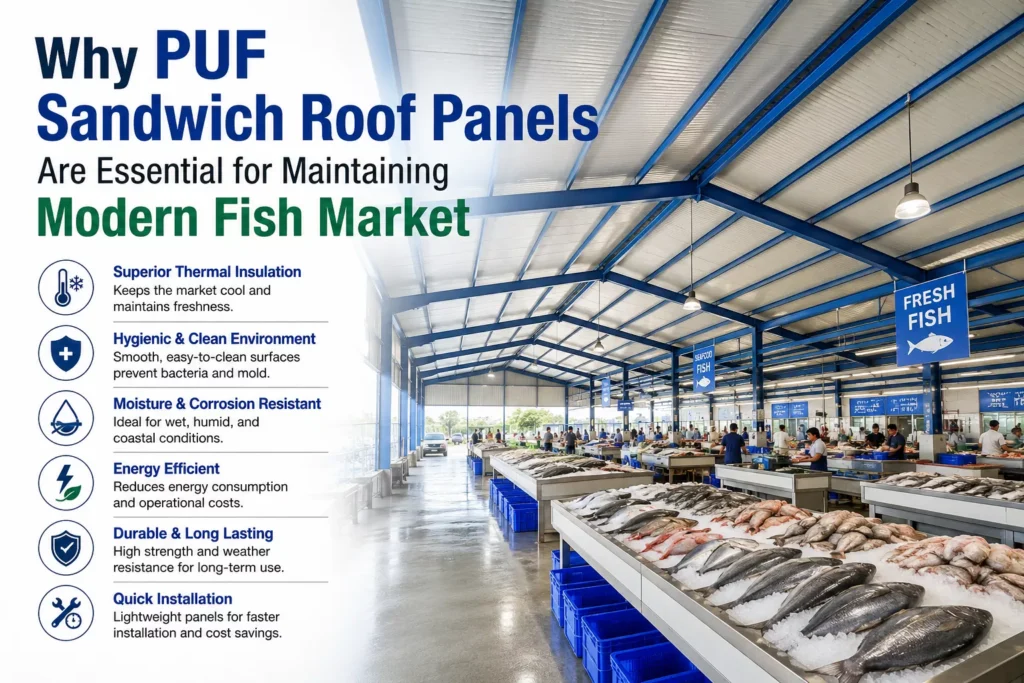
Modern fish markets require advanced infrastructure to maintain hygiene, freshness, temperature control, and durability. Traditional roofing materials often fail to provide the insulation and protection needed in seafood environments where moisture, odor, and fluctuating temperatures are constant challenges. This is where PUF sandwich roof panels for fish market applications have become an essential solution.
PUF (Polyurethane Foam) sandwich roof panels are specially designed insulated panels that offer superior thermal performance, strength, and long-lasting durability. These panels are widely used in fish markets, seafood processing units, cold storage facilities, and hygienic commercial spaces due to their excellent ability to maintain controlled environments.
Understanding PUF Sandwich Roof Panels
PUF sandwich roof panels consist of an insulated polyurethane foam core placed between two strong metal sheets. This structure creates a lightweight yet highly durable roofing system that provides thermal insulation, weather resistance, and structural stability.
The outer metal layers protect the building from harsh environmental conditions, while the PUF core helps regulate internal temperatures. This makes these panels ideal for fish markets where maintaining freshness and hygiene is critical.
Importance of Modern Infrastructure in Fish Markets
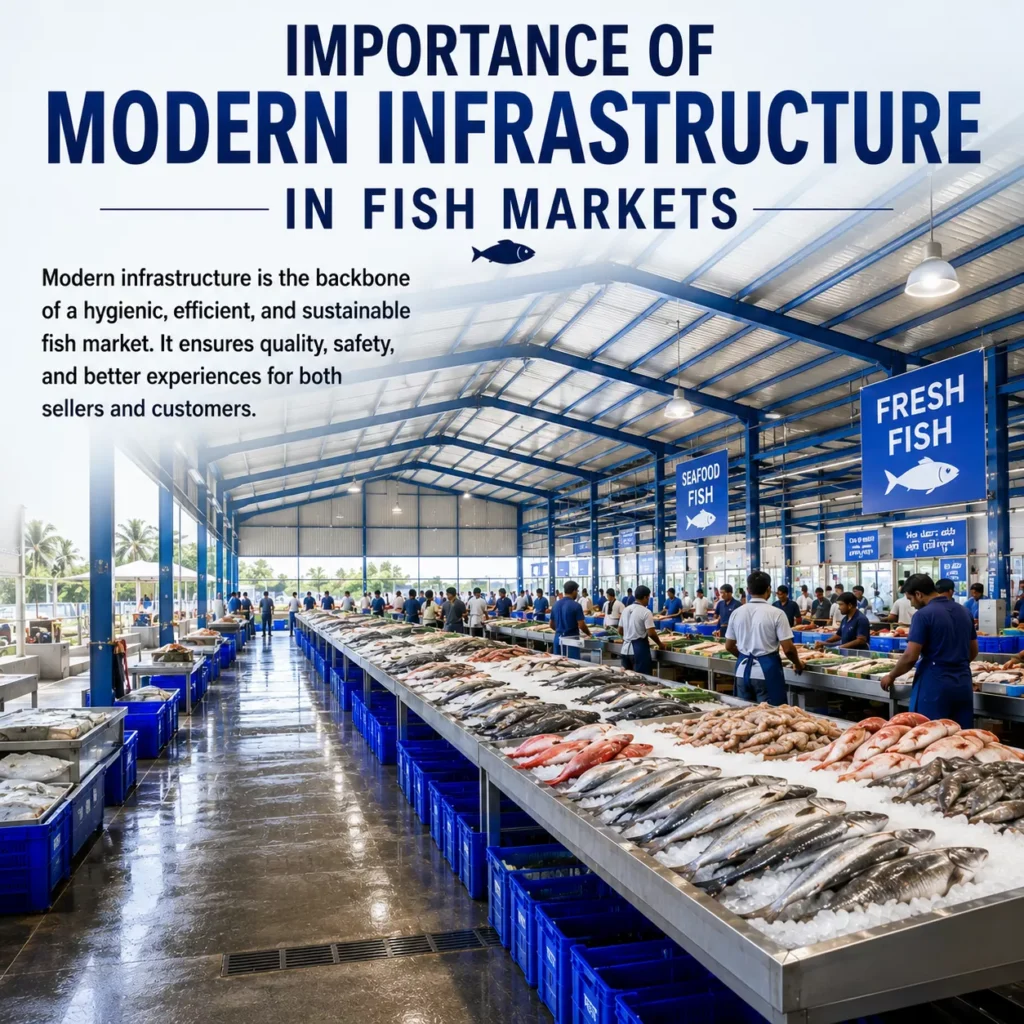
Fish markets operate in highly demanding conditions. Continuous exposure to water, ice, humidity, salt, and organic waste can quickly damage ordinary roofing systems. Poor roofing can lead to excessive heat buildup, bacterial growth, foul odors, and unsafe working conditions.
Modern fish markets require roofing systems that can:
- Maintain cooler indoor temperatures
- Prevent moisture accumulation
- Improve cleanliness and hygiene
- Reduce energy consumption
- Resist corrosion and rust
- Ensure long-term structural durability
PUF sandwich roof panels effectively address all these requirements, making them a preferred roofing choice for modern seafood facilities.
Superior Thermal Insulation for Temperature Control
One of the major benefits of using PUF sandwich roof panels for fish market infrastructure is excellent thermal insulation. Fish and seafood products require cooler environments to preserve freshness and prevent spoilage.
Traditional roofing materials absorb heat quickly, causing indoor temperatures to rise. This increases dependency on refrigeration systems and raises electricity costs. PUF sandwich roof panels reduce heat transfer significantly and help maintain stable internal temperatures.
With improved insulation:
- Fish remains fresh for longer durations
- Ice melting is minimized
- Refrigeration systems work more efficiently
- Energy consumption is reduced
- Indoor comfort improves for workers and customers
This thermal efficiency is especially important in coastal and tropical regions where temperatures remain high throughout the year.
Hygienic Environment and Cleanliness
Hygiene is one of the most critical factors in fish markets. Since seafood is highly perishable, maintaining clean surroundings is essential to prevent contamination and bacterial growth.
PUF sandwich roof panels support hygienic operations because they:
- Have smooth and easy-to-clean surfaces
- Resist mold and fungal growth
- Prevent water seepage
- Reduce dust accumulation
- Minimize bacterial contamination risks
Unlike conventional roofing systems that may crack or develop rust over time, insulated panels maintain a cleaner environment. This helps fish markets comply with food safety and hygiene standards.
Moisture and Corrosion Resistance
Fish markets constantly deal with water, humidity, and salt exposure. Ordinary roofing materials often corrode quickly under these conditions, leading to leaks and structural damage.
PUF sandwich roof panels are manufactured using high-quality coated metal sheets that provide strong resistance against:
- Corrosion
- Rust formation
- Moisture penetration
- Chemical exposure
- Salt-laden coastal environments
Their corrosion-resistant properties ensure long-term performance with minimal maintenance, making them highly suitable for seafood-related applications.
Energy Efficiency and Reduced Operational Costs
Energy efficiency has become a major concern for commercial infrastructure projects. Fish markets rely heavily on refrigeration and cooling systems, which can result in high electricity consumption.
By installing PUF sandwich roof panels, fish market operators can significantly reduce cooling losses and improve energy savings. The insulated core minimizes heat transfer, helping air conditioning and refrigeration systems operate more efficiently with reduced energy load.
Benefits include:
- Lower electricity bills
- Reduced cooling equipment strain
- Better energy conservation
- Improved operational efficiency
- Sustainable building performance
Over time, these savings help offset the initial investment cost of insulated roofing systems.
Fast Installation and Lightweight Structure
Another advantage of PUF sandwich roof panels is their lightweight construction and ease of installation. Traditional concrete or metal roofing systems often require lengthy installation procedures and higher labor costs.
PUF panels are prefabricated and designed for quick assembly, allowing faster project completion. Their lightweight structure also reduces the load on the building framework.
This offers several advantages:
- Faster fish market construction
- Reduced labor expenses
- Minimal installation downtime
- Easier transportation and handling
- Lower structural load requirements
For municipal projects and commercial fish market upgrades, fast installation is a major advantage.
Durability and Long Service Life
Fish markets are high-traffic environments exposed to challenging operating conditions every day. Roofing systems must withstand constant wear, humidity, temperature fluctuations, and external weather conditions.
PUF sandwich roof panels are known for their exceptional durability and long service life. They offer resistance against:
- Heavy rainfall
- UV radiation
- Wind pressure
- Thermal expansion
- Physical impact
With proper installation and minimal maintenance, these panels can perform efficiently for many years. Their durability makes them a cost-effective long-term investment for fish market infrastructure.
Better Indoor Working Conditions
Fish market workers often operate in difficult environments with high temperatures, humidity, and unpleasant odors. Poor ventilation and excessive heat can reduce worker comfort and productivity.
PUF sandwich roof panels help create a cooler and more comfortable indoor atmosphere by reducing heat buildup. Improved insulation contributes to:
- Better air quality
- Reduced indoor heat
- Improved worker comfort
- Enhanced customer experience
- Safer food handling conditions
A comfortable environment also improves the overall cleanliness and operational efficiency of the fish market.
Eco-Friendly and Sustainable Roofing Solution
Sustainability is becoming increasingly important in modern infrastructure development. PUF sandwich roof panels contribute to environmentally responsible construction practices through energy efficiency and reduced material waste.
Their thermal insulation properties reduce dependence on cooling systems, lowering overall energy consumption and carbon emissions.
Additionally, many insulated roofing panels are manufactured using recyclable materials, making them an eco-friendly option for sustainable fish market development.
Ideal Applications in Seafood Infrastructure
PUF sandwich roof panels are widely used across various seafood-related applications, including:
- Modern fish markets
- Seafood processing units
- Cold storage facilities
- Ice storage rooms
- Hygienic food handling zones
- Marine product warehouses
Their versatility and performance make them suitable for both small-scale and large commercial seafood operations.
Choosing the Right PUF Sandwich Roof Panels
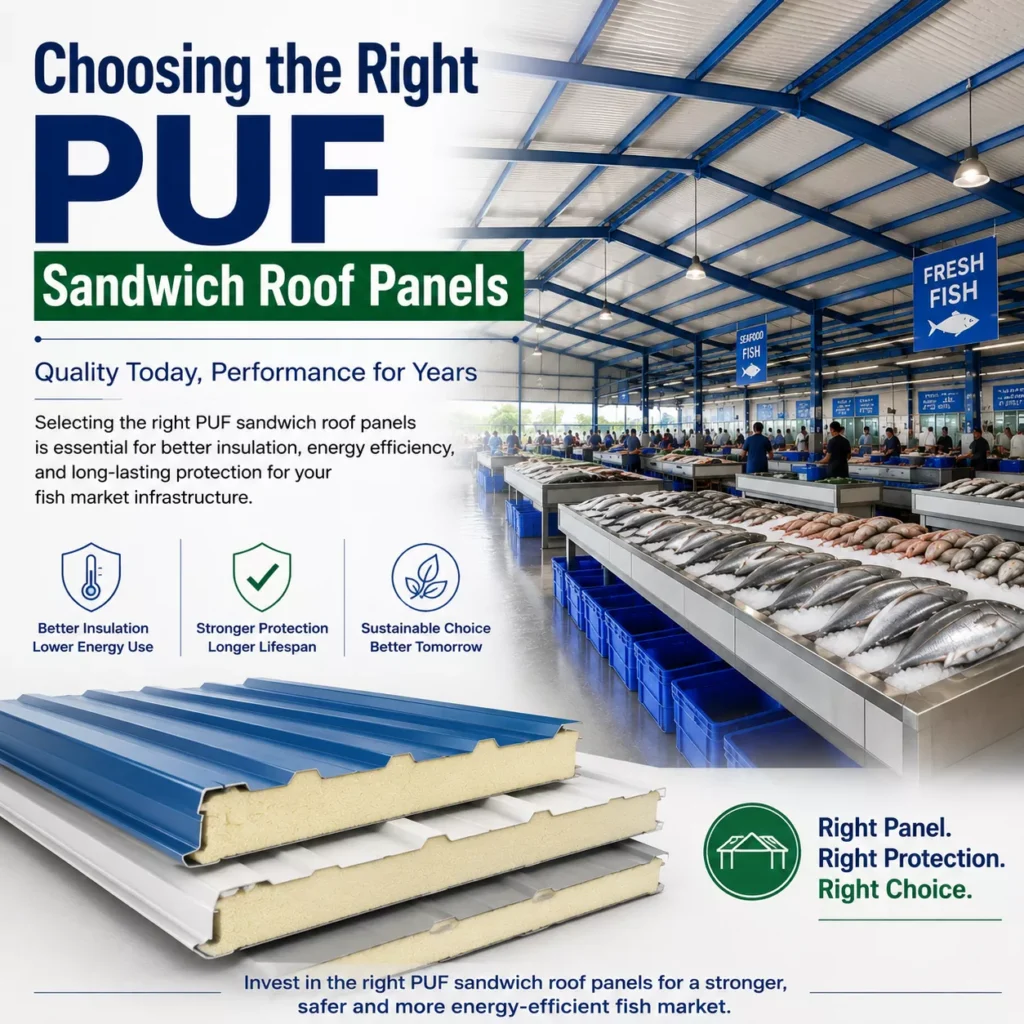
Selecting high-quality PUF sandwich roof panels is essential for ensuring long-term performance and reliability. Important factors to consider include:
- Panel thickness
- Insulation density
- Metal coating quality
- Fire resistance properties
- Weather resistance
- Manufacturer reputation
Working with an experienced manufacturer ensures better product quality, professional installation support, and customized solutions based on project requirements.
Conclusion
Modern fish markets require durable, hygienic, and energy-efficient infrastructure to maintain seafood freshness and ensure safe operating conditions. Traditional roofing materials often fail to withstand the demanding environment of seafood facilities.
This is why PUF sandwich roof panels for fish market applications have become an essential solution. Their superior thermal insulation, moisture resistance, hygiene benefits, durability, and energy efficiency make them ideal for maintaining modern seafood markets.
From improving temperature control to reducing operational costs, PUF sandwich roof panels provide long-term advantages that support better infrastructure and sustainable operations. As fish markets continue to modernize, insulated roofing systems will play a key role in creating cleaner, safer, and more efficient seafood environments.
Frequently Asked Questions
PUF sandwich roof panels help maintain hygienic and temperature-controlled environments in fish markets. Their excellent thermal insulation helps preserve freshness, reduce spoilage, and improve overall storage conditions.
PUF roof panels reduce heat transfer and help maintain cooler indoor temperatures. This controlled environment supports better preservation of seafood products and reduces bacterial growth caused by excess heat.
Major advantages include:
Superior thermal insulation
Energy efficiency
Moisture resistance
Fast installation
Hygienic surface finish
Long-lasting durability
Reduced maintenance costs
The polyurethane foam core minimizes thermal transfer, helping maintain stable temperatures inside the market. This reduces dependence on cooling equipment and improves energy efficiency.
PUF panels are lightweight and prefabricated, allowing faster installation compared to traditional construction materials. This significantly reduces project completion time.
PUF roof panels are available in multiple thickness options such as 30mm, 50mm, 80mm, and 100mm. The ideal thickness depends on insulation and temperature control requirements.