























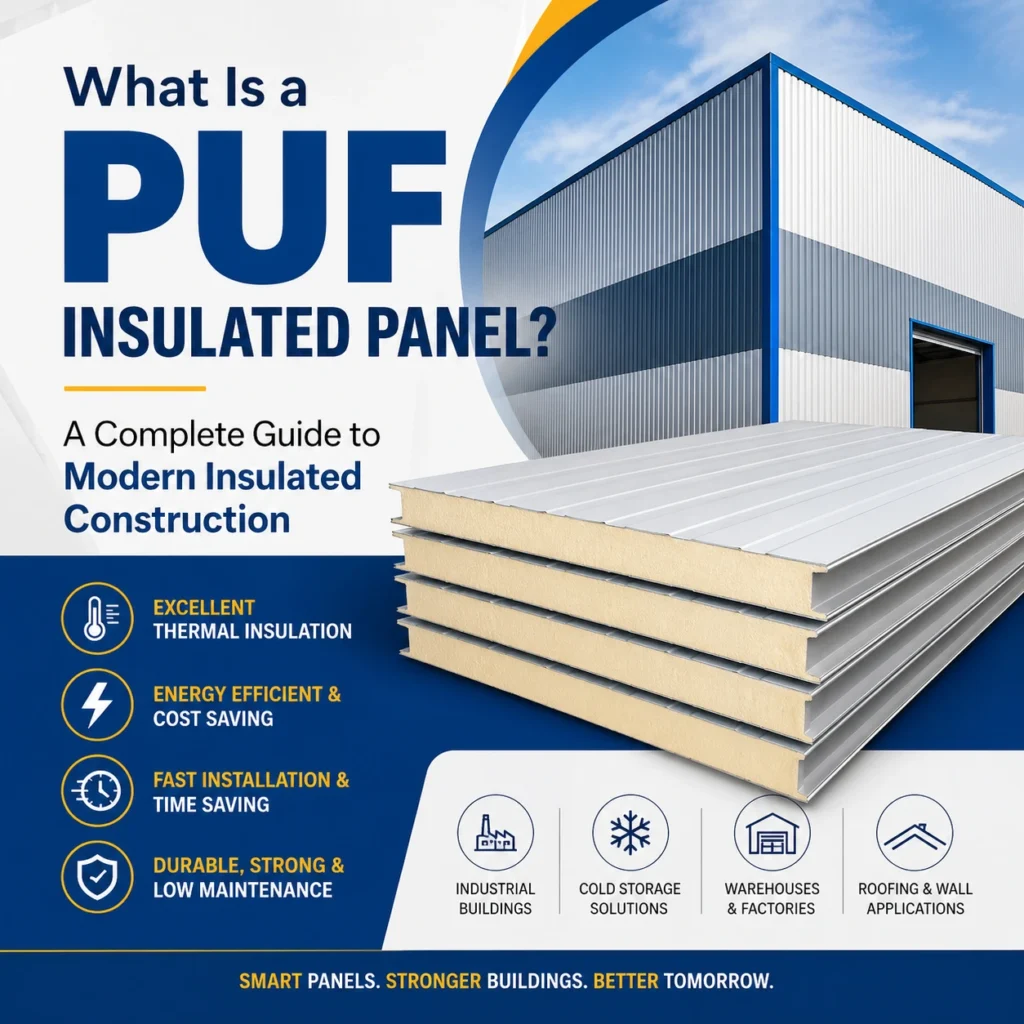
Walk into any newly built warehouse, cold storage unit, or industrial shed today, and you’ll notice something different. The construction looks cleaner, faster, and more uniform. Behind this shift is not just better design—it’s better materials.
One of the biggest contributors to this transformation is the PUF insulated panel. Instead of following the old approach of building layer by layer, these panels simplify construction into a single, efficient system.
The Idea Behind PUF Panels (Explained Simply)
Think of traditional construction like assembling a sandwich manually—first the base, then insulation, then outer protection. It takes time, effort, and precision.
Now imagine receiving that sandwich perfectly prepared and ready to use. That’s essentially what a PUF insulated panel is.
It is a factory-made building component where insulation and structural layers are already combined. The core is made of polyurethane foam, tightly enclosed between two protective sheets. This design eliminates the need for separate insulation work at the site.
Why This Matters More Than You Think
In older construction methods, insulation is often inconsistent. Gaps, uneven layers, and material limitations reduce effectiveness. Over time, this leads to higher energy consumption and maintenance issues.
PUF panels solve this problem at the root. Since they are manufactured under controlled conditions, every panel delivers consistent performance. There’s no guesswork during installation, and the results are predictable.
What Happens After Installation?
Once installed, PUF panels begin doing their job quietly but effectively.
They slow down the movement of heat between the inside and outside of a building. This has two immediate effects:
- Indoor environments remain more stable
- Cooling or heating systems don’t have to work as hard
Over months and years, this translates into noticeable savings in operational costs.
Where You’ll See the Biggest Impact
Not every building benefits equally from insulation, but in certain industries, it makes a massive difference.
Cold Storage
Temperature control is critical here. Even minor fluctuations can affect product quality. PUF panels help maintain consistent cooling with less energy usage.
Manufacturing Units
Factories generate heat from machinery. Insulated panels help regulate internal temperatures, improving working conditions and efficiency.
Warehouses
Large storage spaces are expensive to cool. PUF panels reduce that burden significantly.
Clean Environments
Industries like pharmaceuticals depend on controlled conditions. The sealed nature of these panels supports such requirements.
Speed: The Underrated Advantage
One of the most overlooked benefits of PUF panels is how much time they save.
Traditional construction involves multiple stages—brickwork, plastering, insulation, finishing. Each step depends on the previous one, which slows everything down.
With PUF panels, installation is straightforward. Panels are fixed into place, and the structure takes shape rapidly. This is especially valuable for businesses where time directly impacts revenue.
Strength Without the Weight
At first glance, lightweight materials might seem less reliable. But PUF panels challenge that assumption.
They are engineered to provide structural stability while keeping the overall load low. This reduces stress on the building framework and allows for more flexible design options.
Maintenance: What to Expect Over Time
Buildings made with conventional materials often require regular upkeep—crack repairs, repainting, and insulation fixes.
PUF panels, by contrast, are designed for durability. Their surfaces resist corrosion and environmental damage, meaning fewer maintenance concerns over the years.
For businesses, this isn’t just convenient—it’s cost-effective.
A Shift Toward Practical Construction
The growing popularity of PUF panels isn’t just a trend. It reflects a broader change in how construction is approached.
Today, builders and business owners are asking practical questions:
- How fast can this be completed?
- How much will it cost to maintain?
- How efficient will it be in the long run?
PUF panels provide strong answers to all of these.
Choosing the Right Panels
Even though the concept is simple, selecting the right PUF panel still requires careful thought.
Different projects may need different specifications. Factors like thickness, surface finish, and performance requirements should be matched to the application.
Working with a manufacturer that understands these requirements can make a significant difference in the final outcome.
Looking Ahead
As construction continues to evolve, materials that offer efficiency, consistency, and long-term value will lead the way. PUF insulated panels fit naturally into this future.
They simplify processes, improve performance, and support the growing demand for smarter infrastructure.
For anyone planning a new project—whether it’s industrial, commercial, or specialized—understanding how these panels work is a step toward making better building decisions.
Frequently Asked Questions
PUF insulated panels consist of a rigid polyurethane foam core sandwiched between outer metal sheets, typically made of pre-painted galvanized steel or aluminum for strength and durability.
Yes, PUF panels are widely used in prefab structures due to their lightweight design, quick installation, and ability to reduce overall construction time significantly.
PUF panels are available in multiple thicknesses (commonly 30mm to 120mm), allowing customization based on insulation and structural requirements.
PUF panels can perform efficiently in a wide temperature range, maintaining insulation properties in both hot and cold environments, making them ideal for cold storage and industrial use.
Yes, apart from thermal insulation, PUF panels also offer sound insulation, helping create quieter indoor environments in industrial and commercial spaces.
PUF panels are widely used in industries such as cold storage, warehousing, pharmaceuticals, food processing, and commercial infrastructure due to their insulation efficiency and durability.