

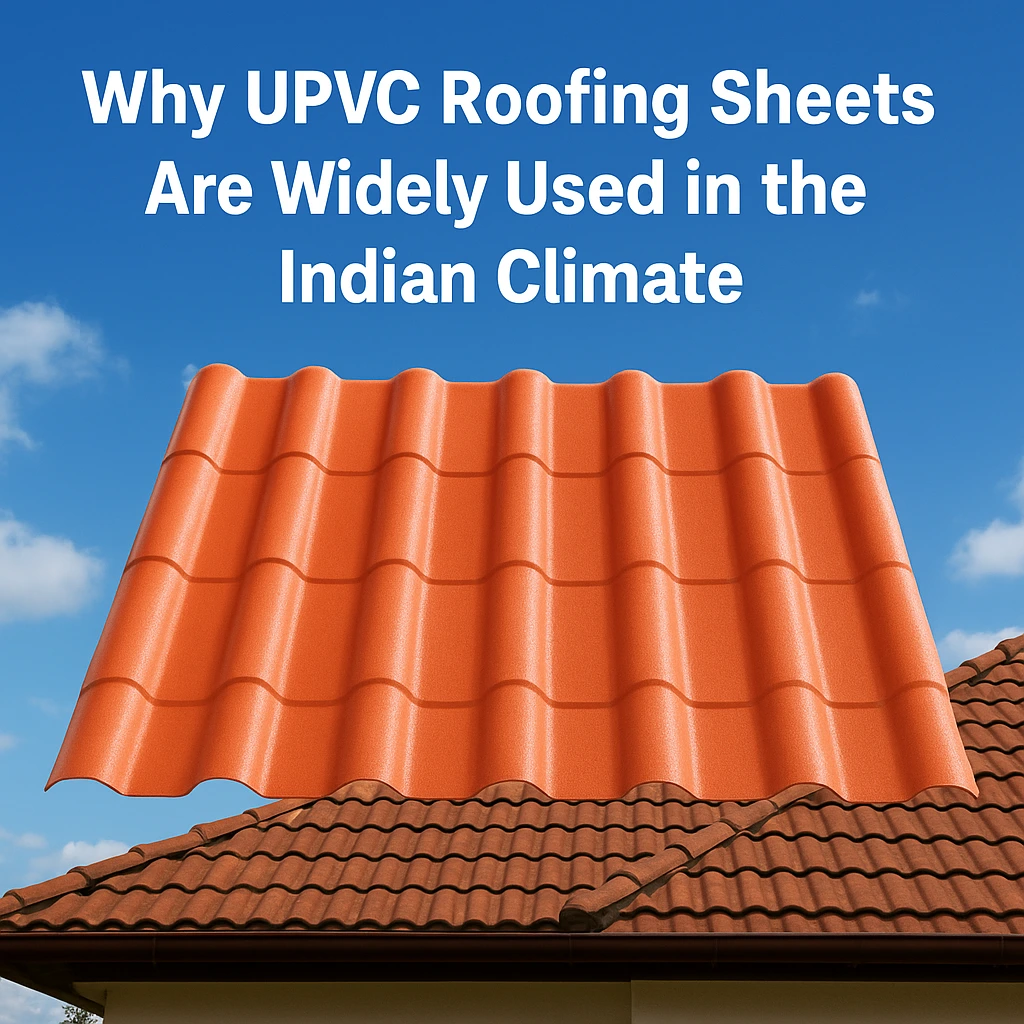
India is a country with highly diverse weather conditions — from scorching summers and intense UV exposure to heavy monsoon rainfall and high humidity in coastal regions. Because of these extreme variations, selecting the right roofing material is a major challenge for homeowners, industries and builders. In recent years, UPVC roofing sheets have emerged as one of the most preferred roofing choices across India, outperforming traditional metal, asbestos and GI sheets in terms of durability, insulation and weather protection.
UPVC (Unplasticized Polyvinyl Chloride) roofing sheets are engineered using advanced polymers and UV-resistant coatings, making them highly adaptable to Indian climatic conditions. Their growing popularity comes from their ability to withstand high temperatures, prevent corrosion, reduce indoor heat and provide long-lasting performance with minimal maintenance.
Excellent Heat Insulation for Hot Indian Summers
One of the biggest concerns in regions like Rajasthan, Delhi, Telangana and Tamil Nadu is extremely high temperature during the summer months. Metal roofing absorbs heat quickly and makes indoor spaces uncomfortably hot, increasing the load on cooling systems.
UPVC roofing sheets, however, are designed with thermal insulation properties that reflect heat rather than absorb it. This results in:
Cooler indoor temperatures
Lower energy consumption for fans and air conditioners
More comfortable living and working environments
Their insulation advantage is a major reason why UPVC roofs are now widely used in industrial sheds, warehouses, homes, farm structures and commercial buildings.
Superior Performance During Monsoon & Heavy Rainfall
Monsoons bring heavy rainfall, wind pressure and moisture exposure in many parts of India. Traditional roofing sheets often rust, leak or weaken under prolonged water contact.
UPVC roofing sheets are non-corrosive and water-resistant, preventing issues like:
Leakage and seepage
Rust and metal decay
Moisture absorption and cracks
Additionally, UPVC roofing produces minimal noise during rainfall, making it ideal for residential houses, schools, hospitals and offices where noise reduction is important.
Corrosion & Chemical Resistance for Coastal and Industrial Regions
Coastal cities like Mumbai, Goa and Chennai face high levels of humidity and salt in the air, which rapidly corrode metal roofing. Similarly, industrial zones contain chemical fumes that accelerate sheet deterioration.
This is where UPVC roofing has a major advantage. It is immune to salt, humidity, chemicals and industrial emissions, ensuring long-lasting protection without rusting or weakening.
That is why UPVC sheets are widely used in:
Chemical plants
Dairy farms & poultry sheds
Fertilizer and textile industries
Coastal residential & commercial buildings
Lightweight Yet Durable Construction
While UPVC roofing sheets are lightweight, they are structurally strong, making them safe and easy to install. Their coil-coated and multi-layer composition gives them high tensile strength and impact resistance, protecting the roof against:
Strong wind pressure
Falling debris
Thermal expansion cracks
Builders prefer UPVC sheets because they reduce structural load and do not require heavy framework, resulting in lower construction and installation costs.
Low Maintenance & Long-Term Value
Unlike metal roofing sheets, UPVC sheets do not require repainting, anti-rust treatment or frequent repairs. Their UV-stabilized top layer prevents fading, brittleness and colour peel, maintaining a new look for many years.
Long-term benefits include:
Lower maintenance expenses
Greater lifespan
Reduced cost of ownership
When evaluated over a 20+ year period, UPVC roofing provides a high return on investment, making it a financially smart choice for both homes and industries.
Eco-Friendly and Energy Efficient Choice
Modern UPVC roofing sheets are 100% recyclable and free from asbestos or harmful chemicals, making them safer for occupants and the environment.
By helping reduce heat absorption and lowering electricity usage, they also contribute to:
Reduced carbon footprint
Energy-efficient buildings
This aligns with the increasing demand for sustainable and green construction materials in India.
Conclusion
UPVC roofing sheets have become widely used in the Indian climate due to their temperature resistance, weatherproofing, lightweight strength, anti-corrosion properties, noise reduction and long-term cost benefits. Whether it is a residential house, warehouse, agricultural building or commercial project, UPVC roofing offers a reliable, durable and smart roofing solution that performs exceptionally well in India’s diverse climatic zones.
As construction standards and customer expectations continue to rise, UPVC roofing is expected to dominate the roofing market even further, replacing many traditional materials.
Frequently Asked Questions
India experiences a wide variety of weather — from scorching summers and intense UV rays to heavy monsoon rainfall and high humidity (especially in coastal areas). UPVC roofing sheets are engineered to handle these extremes by offering strong thermal insulation, weatherproofing, UV resistance, corrosion protection and long-term durability.
Yes. They are non-corrosive and water-resistant, so they resist rust, leakage, seepage, moisture-related damage, and chemical corrosion. This makes them suitable for heavy rainfall, high humidity areas, coastal locations, industrial environments, and more.
They are versatile and suitable for a wide range of applications — residential homes, warehouses, industrial sheds, commercial buildings, farm structures, poultry/dairy farms, coastal buildings, schools, hospitals, etc. Their strength, weather resistance, insulation, and low maintenance make them a good fit for varied needs.
With good quality material and proper installation, UPVC roofing sheets can last around 20–25 years, and in many cases up to 25–30 years — offering a high return on investment over the long run.
Many modern UPVC sheets are recyclable and free from harmful materials like asbestos. By reducing heat absorption (thereby lowering energy usage) and having a long lifespan with minimal maintenance, UPVC roofing can contribute to more sustainable, energy-efficient construction.

