

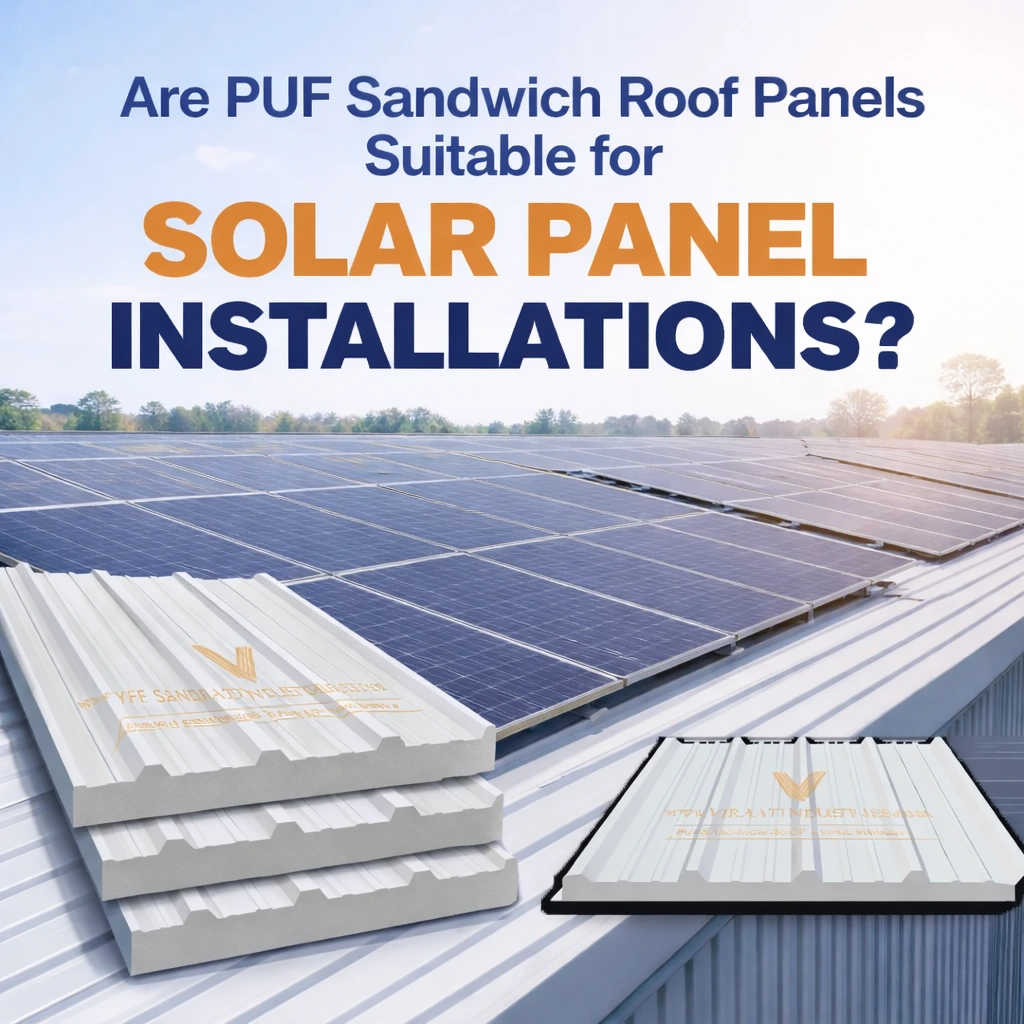
With industries and commercial facilities rapidly shifting toward renewable energy, rooftop solar systems have become a preferred investment. However, before installing photovoltaic modules, one critical question arises: Is your roofing system strong, stable, and efficient enough to support solar infrastructure?
Among modern roofing solutions, PUF sandwich roof panels are widely recognized for insulation, durability, and quick installation. But can they safely and effectively handle solar panel mounting? The short answer is yes — when designed and installed correctly.
Let’s explore why PUF roof panels are increasingly becoming a reliable base for solar power systems.
Understanding the Structure of PUF Sandwich Roof Panels
PUF (Polyurethane Foam) sandwich panels consist of two metal sheets bonded to a rigid insulating core. This structure creates a lightweight yet strong roofing element with excellent thermal performance.
Because the panels are engineered products, their load-bearing ability is predictable. Manufacturers design them to withstand wind loads, maintenance traffic, and additional rooftop equipment — which can include solar mounting systems when proper calculations are followed.
Why Solar Installers Prefer PUF Roof Panels
Lightweight but Strong
PUF panels distribute loads efficiently. A well-installed system transfers the solar structure’s weight across purlins and structural supports rather than stressing a single point.
Thermal Efficiency Boost
Solar panels already reduce direct heat gain on the roof by shading it. Combine this with the superior insulation of PUF panels, and buildings experience significant temperature stability, reducing HVAC demand.
Faster Mounting
The uniform surface and modular design make alignment, rail placement, and anchoring easier compared with conventional RCC roofs.
Corrosion Resistance
Pre-coated metal facings protect the roof for decades, which is essential because solar plants are long-term assets.
Key Technical Considerations Before Installation
While compatibility is strong, successful solar integration depends on proper engineering.
Load Assessment
Every roof has a maximum permissible load. Installers must calculate:
- Dead load (panels + mounting hardware)
- Live load (maintenance personnel)
- Wind uplift forces
If the structure beneath the panel — such as purlins and rafters — is adequate, solar systems can be safely deployed.
Mounting Method
Direct screwing into the sheet without planning is a mistake. Specialized brackets or clamps should anchor into structural members to maintain panel integrity.
Waterproofing
Penetrations must be sealed using approved fasteners and sealing compounds to avoid leakage.
Roof Slope & Orientation
The angle of the building may affect the tilt design of the solar array.
Do PUF Panels Need Reinforcement for Solar?
Not always.
Most industrial buildings that anticipate future solar adoption already factor extra capacity during design. However, older structures might require verification or minor reinforcement.
A structural audit ensures safety, compliance, and insurance acceptance.
Advantages Beyond Power Generation
Installing solar on PUF roofing delivers combined benefits.
Lower Indoor Temperature
The air gap created by panels plus the insulated core, drastically reduces heat transfer.
Improved Equipment Life
Cooler interiors mean machinery and stored goods experience less thermal stress.
Energy Independence
Factories can offset peak electricity tariffs by generating daytime power.
Sustainability Credentials
Many businesses pursuing ESG goals use solar + insulated roofing as a powerful environmental statement.
Common Concerns – Answered
Will drilling damage insulation?
If done professionally with recommended methods, performance remains intact.
Can wind lift the panels?
Proper anchoring systems are designed to resist uplift pressures.
What about maintenance access?
Walkways and distributed supports protect the roof during service.
Will warranties be affected?
Most remain valid when installation guidelines are followed.
Best Practices for Successful Solar Integration
To maximize safety and lifespan:
✔ involve the roof panel manufacturer early
✔ obtain structural load approval
✔ use certified mounting hardware
✔ avoid random penetrations
✔ ensure periodic inspection
When these steps are respected, PUF roofs perform exceptionally well for decades.
Future of Industrial Roofing + Solar
The trend is moving toward energy-generating building envelopes. Instead of seeing roofing as passive protection, businesses now treat it as an asset that delivers returns.
PUF sandwich panels are ideal for this transition because they offer:
- strength
- insulation
- longevity
- compatibility with modern infrastructure
As solar adoption accelerates, we can expect most new factories and warehouses to integrate these systems from day one.
Final Verdict
Yes — PUF sandwich roof panels are highly suitable for solar panel installations, provided structural planning and professional mounting practices are followed.
They not only support renewable energy but also enhance overall building efficiency, making them one of the smartest roofing choices for industrial growth.

