

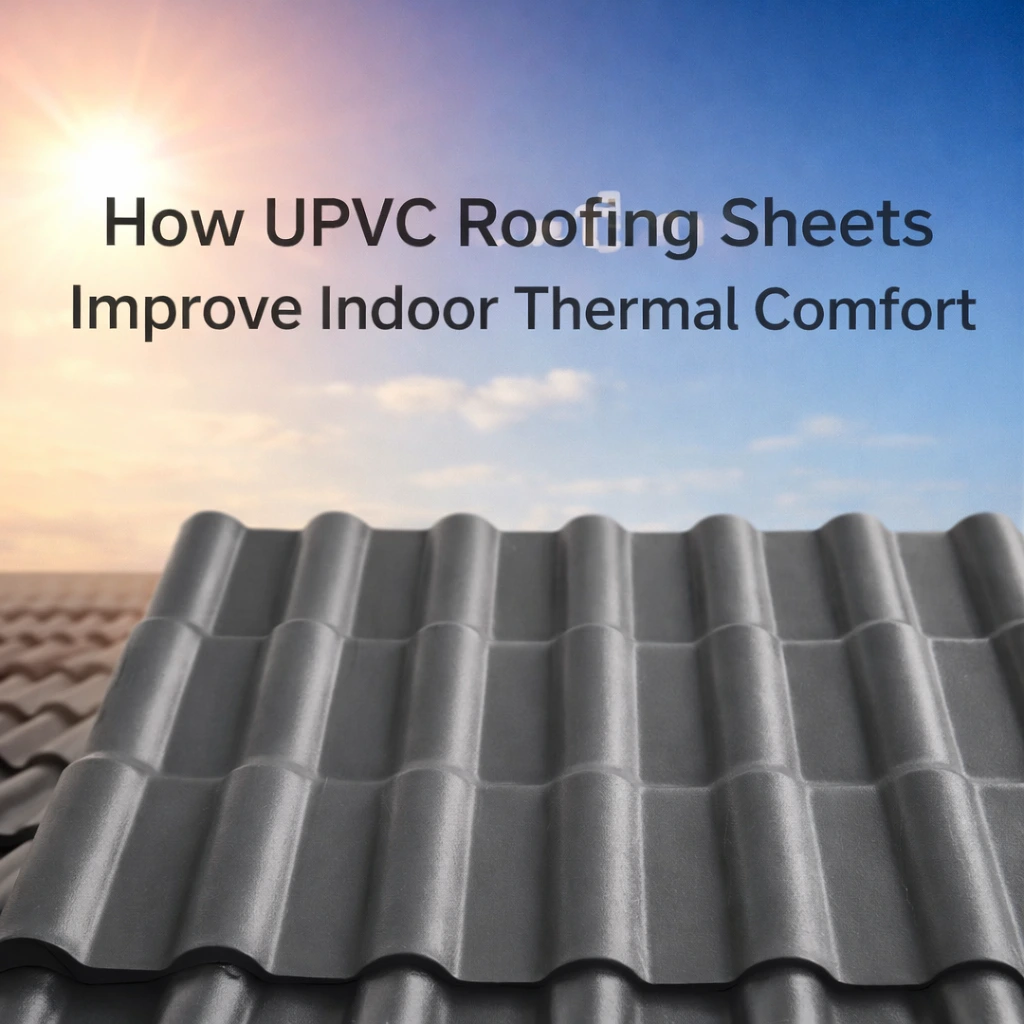
Creating a comfortable indoor environment has become a major priority for homeowners, architects, and industrial facility managers. With outdoor temperatures rising and energy costs increasing every year, using materials that naturally regulate indoor climate makes a significant contribution to comfort and savings. Among various roofing solutions available today, UPVC roofing sheets are gaining popularity due to their excellent thermal performance. In this blog, we explore how UPVC roofing sheets help enhance indoor thermal comfort while also reducing energy dependency and improving building performance.
What Are UPVC Roofing Sheets?
UPVC (Unplasticized Polyvinyl Chloride) roofing sheets are engineered roofing solutions made from rigid PVC, modified to enhance heat resistance, weather resistance, and structural stability. Unlike traditional PVC, UPVC does not contain plasticizers, making the material more durable, fire-resistant, and thermally stable. These sheets are widely used in residential buildings, warehouses, industrial sheds, commercial structures, farmhouses, and agricultural buildings.
Understanding Thermal Comfort in Buildings
Thermal comfort refers to the condition in which occupants feel satisfied with the indoor temperature. Achieving thermal comfort requires balancing several factors, including:
- Temperature
- Humidity
- Ventilation
- Radiant heat
- Airflow
When the roof absorbs excess heat, the indoor temperature rises, forcing cooling systems like fans and air conditioners to work harder. Therefore, using roofing materials with natural insulation properties plays a key role in maintaining comfortable indoor conditions.
How UPVC Roofing Sheets Provide Thermal Insulation
Low Thermal Conductivity
UPVC roofing sheets have a low thermal conductivity, which means they do not absorb or transfer heat easily. Compared to metal roofing sheets, which heat up rapidly under sunlight, UPVC sheets minimize heat penetration. As a result, indoor spaces remain significantly cooler even during peak summer.
For industries and warehouses that store sensitive goods or machinery, this thermal resistance is crucial for maintaining stable indoor temperatures.
Reflective Surface Reduces Heat Absorption
Most UPVC roofing sheets come with a reflective surface layer that helps reduce heat absorption. By reflecting a portion of solar radiation away from the building, UPVC sheets decrease the thermal load on the structure.
This results in:
- Lower indoor temperature
- Reduced HVAC consumption
- Longer building life due to minimized heat stress
The combination of low absorption and reflectivity contributes greatly to better thermal comfort.
UV Resistance for Long-Term Performance
Exposure to ultraviolet (UV) rays causes regular roofing materials to degrade and become heat conductors over time. UPVC sheets are manufactured with UV-resistant coatings that preserve their structural integrity under long-term exposure to sunlight.
This means:
- Consistent insulation performance over the years
- No discoloration or surface cracking
- Reduced maintenance requirements
UV resistance is particularly advantageous in tropical and high-sunlight regions, where building materials face intense radiation.
Prevention of Radiant Heat Transfer
Radiant heat is one of the main causes of indoor temperature rise. Metal and asbestos roof sheets often radiate absorbed heat into the interior long after sunset, making nights uncomfortable as well.
UPVC roofing sheets prevent this effect due to their insulating core and polymer composition. They do not retain heat the way metal sheets do, which helps maintain cool interior temperatures even during late hours.
Ventilation Compatibility
UPVC roofing systems are often installed with matching ventilation accessories such as ridge vents, louvers, and side vents. Proper ventilation supports thermal comfort by:
- Reducing humidity
- Removing stale or hot air
- Minimizing condensation
When combined with insulated UPVC panels, these airflow systems create a balanced and pleasant indoor environment.
Energy Savings through Better Thermal Comfort
Improved thermal comfort also translates into measurable financial benefits. Buildings equipped with UPVC roofing sheets often consume less electricity for cooling during summer.
Energy savings occur due to:
- Reduced dependency on air conditioning
- Lower need for reflective coatings or insulation layers
- Stable indoor climate with less thermal cycling
For industries with high electricity usage, the operational savings can be significant over time.
Comparison with Traditional Roofing Materials
To understand the thermal benefits of UPVC roofing sheets, it’s useful to compare them with other common materials:
| Roofing Material | Heat Absorption | Thermal Conductivity | Indoor Comfort |
|---|---|---|---|
| Metal Sheets | High | High | Poor |
| Asbestos Sheets | Medium | Medium | Moderate |
| Polycarbonate Sheets | Medium | Medium | Moderate |
| UPVC Sheets | Low | Low | Excellent |
UPVC clearly provides superior thermal insulation compared to conventional roofing materials, making it a preferred choice for buildings requiring temperature control.
Ideal Applications of UPVC Roofing Sheets
UPVC roofing sheets are suitable for structures where thermal comfort is essential, including:
- Residential homes
- Schools and institutions
- Warehouses & industrial units
- Garages and workshops
- Agricultural buildings (poultry, dairy, greenhouse)
- Parking sheds
- Terrace roofing
In each application, UPVC helps maintain a stable indoor temperature along with structural durability and cost-efficiency.
Conclusion
UPVC roofing sheets are not just durable roofing materials; they are effective thermal insulation solutions that contribute significantly to enhancing indoor comfort. Through low thermal conductivity, UV resistance, reflective surface design, and reduced radiant heat transfer, UPVC sheets naturally maintain cooler indoor environments. With energy prices rising and climate conditions becoming harsher, choosing roofing materials that support thermal comfort is a smart long-term investment.
Whether for homes, commercial projects, or industrial infrastructure, UPVC roofing sheets offer a reliable, economical, and thermally efficient solution that enhances both comfort and performance.
Frequently Asked Questions
UPVC roofing sheets are rigid, unplasticized polyvinyl chloride sheets engineered for roofing use. Unlike traditional PVC, they lack plasticizers, making them structurally stronger, more heat-resistant, and more durable.
They have low thermal conductivity, meaning they absorb and transmit far less heat than metal or asbestos roofing. This helps keep indoor spaces cooler.
Yes — many UPVC sheets come with reflective surface layers that reflect solar radiation, further reducing heat absorption into the building.
UPVC systems can be installed with vents (ridge, louvers, etc.) that improve airflow, reduce humidity, and disperse hot air — enhancing overall thermal comfort.
They’re ideal for residential homes, schools, industrial warehouses, agricultural structures, workshops, and terrace roofs — anywhere temperature control matters.
Yes — by limiting heat penetration and lowering internal temperature loads, UPVC roofs can reduce the demand on cooling equipment, boosting efficiency.

