
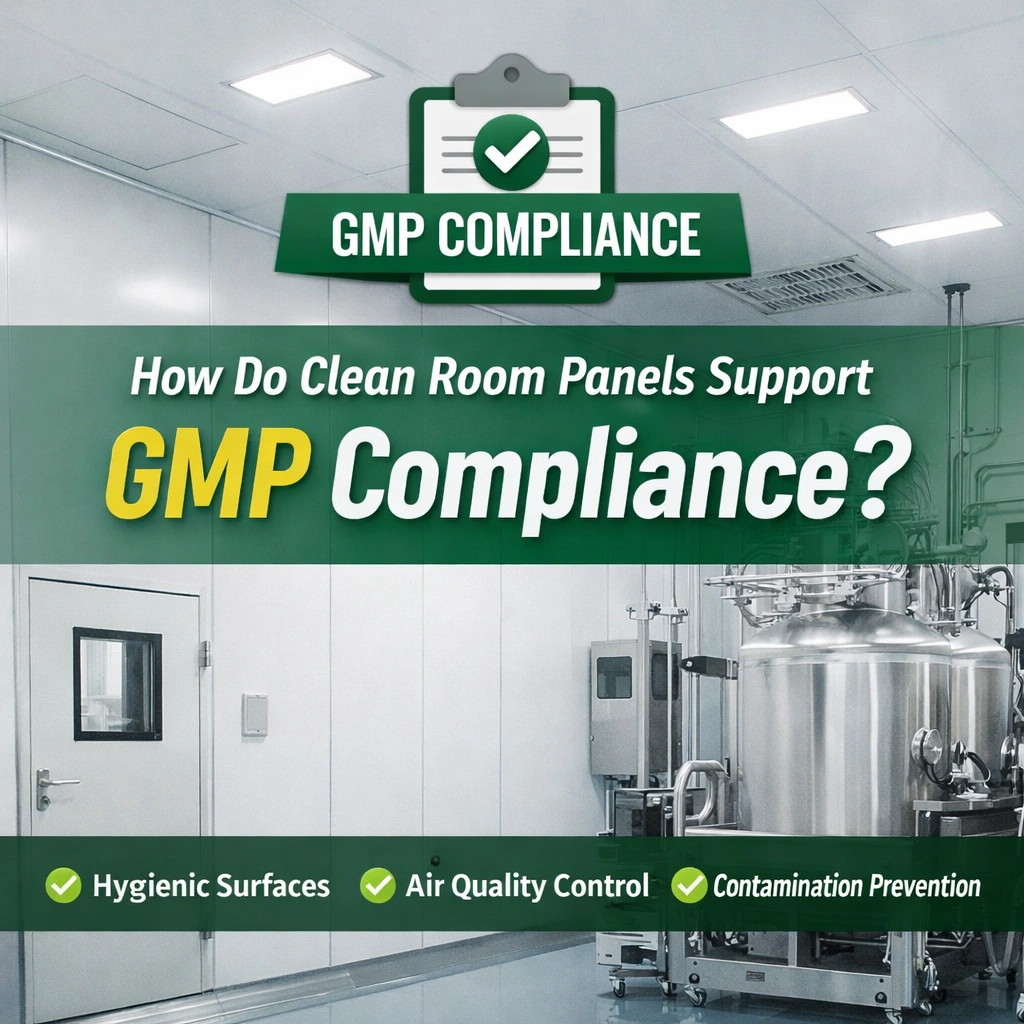
Maintaining strict quality and safety standards is critical in industries such as pharmaceuticals, food processing, biotechnology, and healthcare. One of the most widely recognized systems ensuring product safety and consistency is Good Manufacturing Practice (GMP). These regulations are designed to minimize risks such as contamination, errors, and inconsistencies during production.
A key component in achieving GMP compliance is the infrastructure of the facility itself—especially the use of clean room panels. These panels are specifically engineered to create controlled environments where hygiene, air quality, and durability meet stringent standards. Understanding how clean room panels support GMP compliance can help businesses make informed decisions when designing or upgrading their facilities.
What Are Clean Room Panels?
Clean room panels are prefabricated modular wall and ceiling systems used to construct controlled environments. These panels are typically made with insulated cores such as PUF or PIR and are finished with smooth, non-porous surfaces like pre-coated galvanized steel.
They are designed to prevent the accumulation of dust, bacteria, and other contaminants, making them ideal for environments that require high levels of cleanliness. Their modular nature also allows for easy installation and customization based on specific industry requirements.
Understanding GMP Compliance
GMP guidelines focus on ensuring that products are consistently produced and controlled according to quality standards. These guidelines emphasize:
- Clean and hygienic manufacturing environments
- Controlled air quality and filtration
- Prevention of cross-contamination
- Easy cleaning and maintenance
- Proper material handling and storage
To meet these requirements, the construction materials used in the facility must actively contribute to maintaining cleanliness and control. This is where clean room panels play a vital role.
Hygienic and Non-Porous Surfaces
One of the primary GMP requirements is maintaining a clean and sanitary environment. Clean room panels are designed with smooth, non-porous surfaces that do not absorb moisture or harbor bacteria.
Unlike traditional construction materials such as plaster or wood, these panels eliminate cracks and crevices where contaminants can accumulate. This ensures that cleaning and sanitization processes are more effective and consistent, directly supporting GMP hygiene standards.
Seamless Joint Design to Prevent Contamination
GMP compliance requires minimizing any chance of contamination. Clean room panels are engineered with tight interlocking systems and sealed joints that reduce gaps between panels.
These seamless joints prevent the entry of dust, microbes, and airborne particles into the controlled environment. Additionally, special sealants and accessories are used to ensure airtight construction, which is essential for maintaining clean room classifications.
Superior Air Quality Control
Air quality is a crucial factor in GMP-regulated environments. Clean room panels help maintain controlled airflow and pressure differentials within the facility.
They are compatible with HVAC and filtration systems such as HEPA filters, ensuring that airborne contaminants are effectively removed. The airtight structure created by these panels helps maintain positive or negative pressure as required, preventing contamination from external sources.
Easy Cleaning and Maintenance
GMP guidelines emphasize regular cleaning and maintenance to ensure consistent product quality. Clean room panels are designed for easy cleaning with minimal effort.
Their smooth surfaces allow for quick wiping and sanitization without the risk of damage. They are resistant to chemicals, disinfectants, and moisture, making them suitable for frequent cleaning routines required in the pharmaceutical and food industries.
This ease of maintenance not only ensures compliance but also reduces operational downtime and maintenance costs.
Durability and Long-Term Performance
Facilities operating under GMP regulations require materials that can withstand continuous use without degradation. Clean room panels are highly durable and resistant to corrosion, impact, and environmental stress.
Their long lifespan ensures that the integrity of the clean room is maintained over time, reducing the need for frequent repairs or replacements. This reliability is essential for maintaining consistent compliance with GMP standards.
Thermal and Insulation Efficiency
Temperature and humidity control are critical in GMP-compliant environments. Clean room panels, especially those with insulated cores like PUF or PIR, provide excellent thermal insulation.
This helps maintain stable internal conditions, which are essential for sensitive manufacturing processes. Proper insulation also improves energy efficiency by reducing the load on HVAC systems, making operations more cost-effective.
Customization for Industry-Specific Needs
Different industries have unique GMP requirements. Clean room panels can be customized in terms of thickness, coating, size, and design to meet specific operational needs.
For example, pharmaceutical facilities may require higher levels of contamination control, while food processing units may focus more on moisture resistance and hygiene. The flexibility of clean room panels ensures that they can be tailored to meet diverse GMP standards.
Compliance with International Standards
Clean room panels are manufactured to meet various international standards related to safety, hygiene, and performance. These include ISO clean room classifications and fire safety standards.
Using certified clean room panels simplifies the process of achieving GMP compliance, as they are already designed to meet many of the required criteria. This reduces the complexity of inspections and approvals.
Quick Installation and Reduced Downtime
Time is a critical factor in industrial projects. Clean room panels offer a modular construction approach, allowing for faster installation compared to traditional building methods.
This not only speeds up project completion but also ensures that facilities can become operational quickly while maintaining compliance with GMP requirements. Additionally, modular panels can be easily modified or expanded as business needs evolve.
Prevention of Cross-Contamination
Cross-contamination is one of the biggest concerns in GMP-regulated industries. Clean room panels help create segregated zones within a facility, ensuring that different processes do not interfere with each other.
By maintaining controlled environments with proper airflow and sealed structures, these panels significantly reduce the risk of contamination between production areas.
Conclusion
Clean room panels play a crucial role in supporting GMP compliance by providing a controlled, hygienic, and durable environment for manufacturing processes. From preventing contamination and maintaining air quality to ensuring easy cleaning and long-term performance, these panels address multiple aspects of GMP requirements.
For industries where quality, safety, and compliance are non-negotiable, investing in high-quality clean room panels is not just a choice—it is a necessity. By integrating these advanced panel systems into facility design, businesses can ensure regulatory compliance, improve operational efficiency, and maintain the highest standards of product quality.
Frequently Asked Questions
Clean room panels form the structural foundation of controlled environments by providing smooth, sealed, and hygienic surfaces that meet strict GMP requirements for cleanliness and contamination control.
They are made with non-porous materials that resist microbial growth and prevent dust accumulation, ensuring that contaminants cannot settle or spread within the production space.
GMP guidelines require surfaces to be smooth and impervious so they can be easily cleaned and sanitized, reducing the risk of particle buildup and microbial contamination.
They are designed to integrate with HVAC and HEPA filtration systems, helping regulate airflow, control airborne particles, and maintain required cleanliness levels inside the facility.
Yes — insulated panels such as PUF or PIR help stabilize internal temperature and humidity, which is essential for GMP compliance in sensitive manufacturing processes.
High-quality panels are designed to withstand frequent cleaning with disinfectants and chemicals without degrading, ensuring long-term compliance and durability.
Yes — panel systems can be designed according to specific GMP grades and ISO cleanroom classifications, ensuring suitability for various industries like pharmaceuticals and food processing.

