























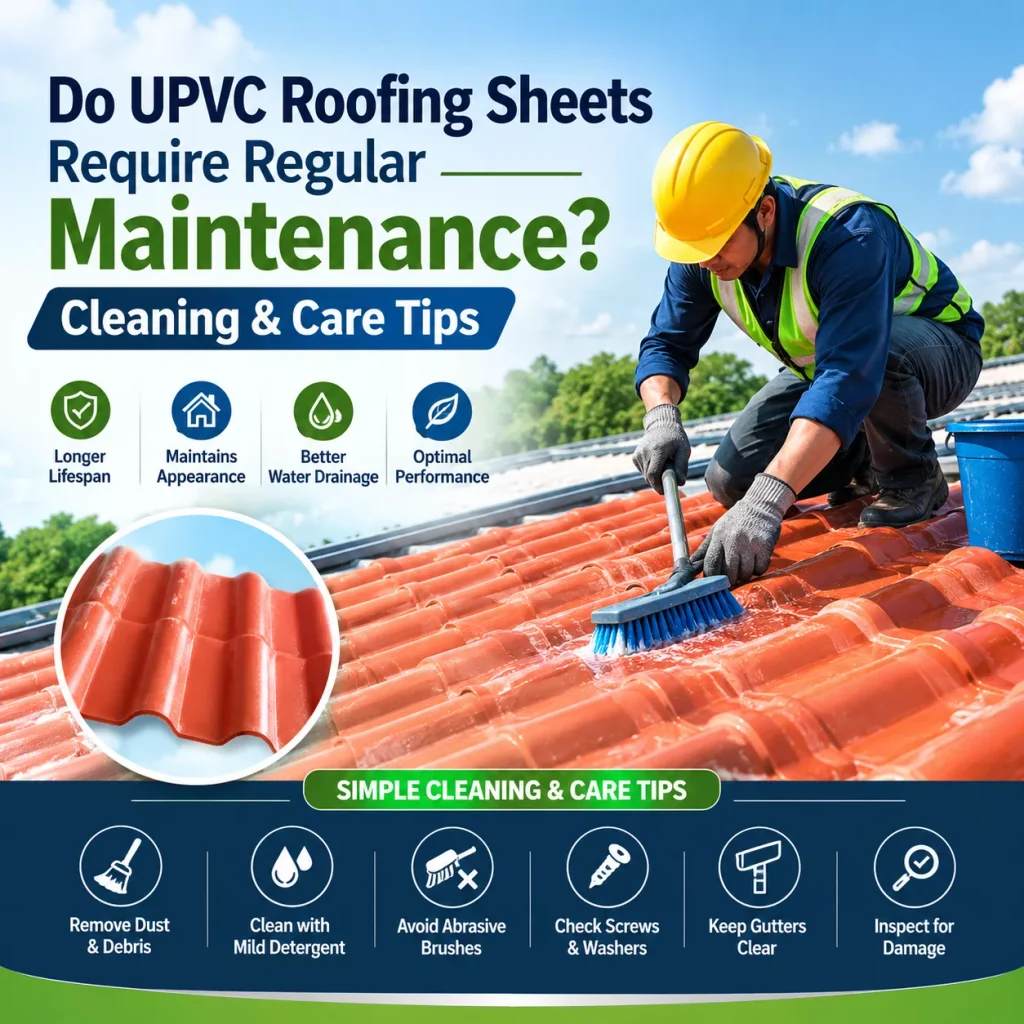
UPVC roofing sheets are widely used for residential, commercial, agricultural, and industrial buildings because they offer a practical combination of durability, lightweight construction, weather resistance, and low maintenance. However, low maintenance does not mean maintenance-free. Like any roofing material, UPVC sheets benefit from periodic cleaning and inspection to keep them in good condition and help identify minor issues before they become expensive repairs.
One of the advantages of UPVC roofing is that it does not require complicated maintenance routines. With basic cleaning, regular visual checks, and proper care around fasteners and overlaps, you can help maintain the roof’s appearance and performance for years.
Why Is Maintenance Important for UPVC Roofing Sheets?
UPVC, or unplasticized polyvinyl chloride, is designed to withstand outdoor conditions. The material offers resistance to moisture, corrosion, and many common environmental factors. Despite these properties, roofing sheets remain exposed to dust, rain, sunlight, leaves, bird droppings, pollution, and other debris.
Over time, accumulated dirt can affect the appearance of the roof and may block gutters or drainage paths. Organic debris can also retain moisture around certain areas of the roofing system. Regular maintenance helps keep the roof clean, allows you to inspect its condition, and supports effective rainwater drainage.
Maintenance also provides an opportunity to check screws, washers, overlaps, flashing, ridge areas, and supporting structures.
How Often Should UPVC Roofing Sheets Be Maintained?
The maintenance frequency depends on the location, surrounding environment, roof design, and level of exposure to dust and pollution. A roof located near trees may require more frequent cleaning because leaves and branches can accumulate on the surface.
For most buildings, a visual inspection every few months is a practical approach. A more detailed inspection can be carried out at least once or twice a year. Buildings in areas with heavy rainfall, industrial pollution, coastal conditions, or substantial dust may require more frequent attention.
After severe weather, it is also sensible to inspect the roof for visible damage, displaced accessories, blocked drainage points, or loose components.
1. Remove Dust and Loose Debris Regularly
Dust, leaves, twigs, and other debris can collect on roofing sheets, particularly around valleys, edges, gutters, and areas beneath trees. Removing this material is one of the simplest ways to care for your UPVC roof.
Use a soft broom or a suitable cleaning tool to remove loose debris. Avoid dragging heavy or sharp objects across the sheet because they may scratch or damage the surface.
Do not allow large amounts of debris to remain on the roof for long periods, especially during the rainy season.
2. Clean the Sheets With Water
For routine cleaning, clean water can remove loose dust and surface dirt from UPVC roofing sheets. A hose with moderate water pressure can be useful for larger roofs.
Start from the upper section of the roof and work toward the lower edge so that dirt and water flow downward. Avoid excessively high water pressure because aggressive cleaning can potentially damage surfaces, accessories, seals, or other roofing components.
For stubborn dirt, use a mild cleaning solution recommended for UPVC materials.
3. Use Mild Cleaning Products
Some stains may not disappear with water alone. In such situations, use a mild detergent diluted with water and apply it with a soft sponge or cloth.
Avoid strong solvents, abrasive cleaners, and harsh chemicals unless the roofing manufacturer specifically confirms that they are suitable. Certain chemicals can affect the surface finish or appearance of UPVC products.
Always test a cleaning solution on a small, less noticeable area before applying it across the entire roof.
4. Avoid Abrasive Brushes
Abrasive brushes, metal scrapers, and rough cleaning pads can leave scratches on the surface. While a small scratch may appear insignificant, repeatedly using aggressive cleaning methods can affect the appearance of the roofing sheets.
A soft-bristle brush or non-abrasive cloth is generally more appropriate for routine cleaning.
5. Check Roofing Screws and Washers
Fasteners are an important part of any roofing system. During maintenance, inspect exposed screws and washers for signs of loosening, displacement, or deterioration.
Do not randomly overtighten screws. Excessive tightening can place unnecessary stress on the sheet and may affect the fixing point. If you notice damaged or loose fasteners, replacement or correction should follow the roofing manufacturer’s recommendations.
6. Inspect Sheet Overlaps and Joints
UPVC roofing systems commonly use overlapping sheets to create continuous roof coverage. Check these areas periodically for visible gaps, movement, or signs of water entry.
Pay particular attention to side laps, end laps, ridge areas, flashing, and other joints. If you notice persistent leakage, investigate the source rather than simply applying sealant over the visible symptom.
Proper installation and suitable accessories play an important role in maintaining watertight performance.
7. Keep Gutters and Drainage Paths Clear
A clean roof can still experience problems if rainwater cannot drain properly. Leaves, dust, plastic waste, and other debris can block gutters and downpipes.
Clean gutters and drainage channels regularly, particularly before and during the rainy season. Make sure water can move freely away from the roof.
Good drainage reduces standing water and helps protect the overall roofing structure.
8. Trim Overhanging Branches
Trees close to a building can provide shade but may also create roofing maintenance challenges. Falling branches can damage roofing sheets, while leaves can accumulate on the roof and block drainage systems.
Trim branches that extend directly over the roof where appropriate. This can reduce the amount of organic debris reaching the roofing surface and minimize the risk of physical damage during strong winds.
9. Look for Cracks, Damage, or Discoloration
During each inspection, look carefully for unusual changes in the roofing sheets. Possible warning signs include cracks, holes, broken edges, significant surface damage, unusual movement, or persistent discoloration.
Do not ignore a small damaged area if it is allowing water to enter the building. Early attention can help prevent moisture from reaching insulation, ceilings, walls, electrical components, or stored materials.
For significant damage, consult a qualified roofing professional or the product manufacturer.
10. Never Walk Directly on Unsupported Sheets
Safety is one of the most important aspects of UPVC roof maintenance. Although UPVC roofing sheets are durable, they are not designed to support a person’s weight at every point.
Never assume that a sheet can safely carry your body weight simply because it looks strong. Use appropriate access equipment and follow the manufacturer’s recommendations for maintenance and roof access.
For large, steep, or difficult-to-access roofs, professional inspection is safer than attempting maintenance yourself.
Does UPVC Roofing Need Painting?
One reason many property owners choose UPVC roofing sheets is their relatively low-maintenance finish. Unlike some traditional roofing materials, UPVC sheets generally do not require routine painting simply to maintain their basic performance.
However, the appearance and finish can vary depending on product quality, environmental exposure, and manufacturer specifications. If repainting or coating is being considered for a specific reason, use only products confirmed as compatible with the particular UPVC roofing material.
Applying an unsuitable coating may affect the surface or warranty conditions.
What Should You Avoid When Cleaning UPVC Roofing Sheets?
Good maintenance is partly about knowing what not to do. Avoid:
- Using abrasive cleaning powders
- Scrubbing aggressively with metal brushes
- Applying unapproved solvents or harsh chemicals
- Using excessive water pressure
- Dragging heavy equipment across the sheets
- Overtightening roofing screws
- Leaving leaves and debris on the roof for long periods
- Walking directly on unsupported roofing sheets
- Ignoring repeated water leakage
- Making modifications without considering the roofing structure
Following these precautions can help protect both the sheets and the supporting roofing system.
Benefits of Regular UPVC Roofing Maintenance
A simple maintenance routine offers several practical benefits. It helps keep the roof visually clean, supports proper rainwater drainage, makes it easier to identify damaged components, and can reduce the likelihood of minor issues developing into major repairs.
Regular inspection is also useful for checking the condition of roofing accessories and structural supports. Instead of waiting until water enters the building, property owners can identify potential problem areas earlier.
For commercial and industrial buildings, preventive maintenance can be particularly valuable because roofing problems may disrupt operations, storage areas, production spaces, or equipment.
A Simple UPVC Roofing Maintenance Checklist
You can use the following checklist during routine inspections:
Every few months:
- Remove leaves and loose debris.
- Check visible sheet surfaces.
- Inspect gutters and drainage points.
- Look for obvious cracks or physical damage.
Once or twice a year:
- Inspect screws and washers.
- Check overlaps, flashing, and ridge areas.
- Examine areas around roof penetrations.
- Look for signs of water leakage.
- Check nearby tree branches and debris accumulation.
After severe weather:
- Inspect the roof for visible damage.
- Check for displaced accessories or loose components.
- Clear blocked drainage points.
- Investigate any new leakage immediately.
Final Thoughts
UPVC roofing sheets are designed to provide a durable and low-maintenance roofing solution, but regular care remains important for long-term performance. Routine cleaning, debris removal, drainage maintenance, fastener inspection, and timely identification of damage can help keep the roofing system in good condition.
The key is consistency rather than complicated maintenance. Simple inspections performed at appropriate intervals can help identify potential problems before they become costly repairs. Always follow the specific maintenance instructions provided by the UPVC roofing sheet manufacturer, particularly for cleaning chemicals, fixing systems, access, and repairs.
For projects where durability, lightweight construction, weather resistance, and easier maintenance are important considerations, high-quality UPVC roofing sheets can be a practical choice for residential, commercial, agricultural, and industrial applications.