

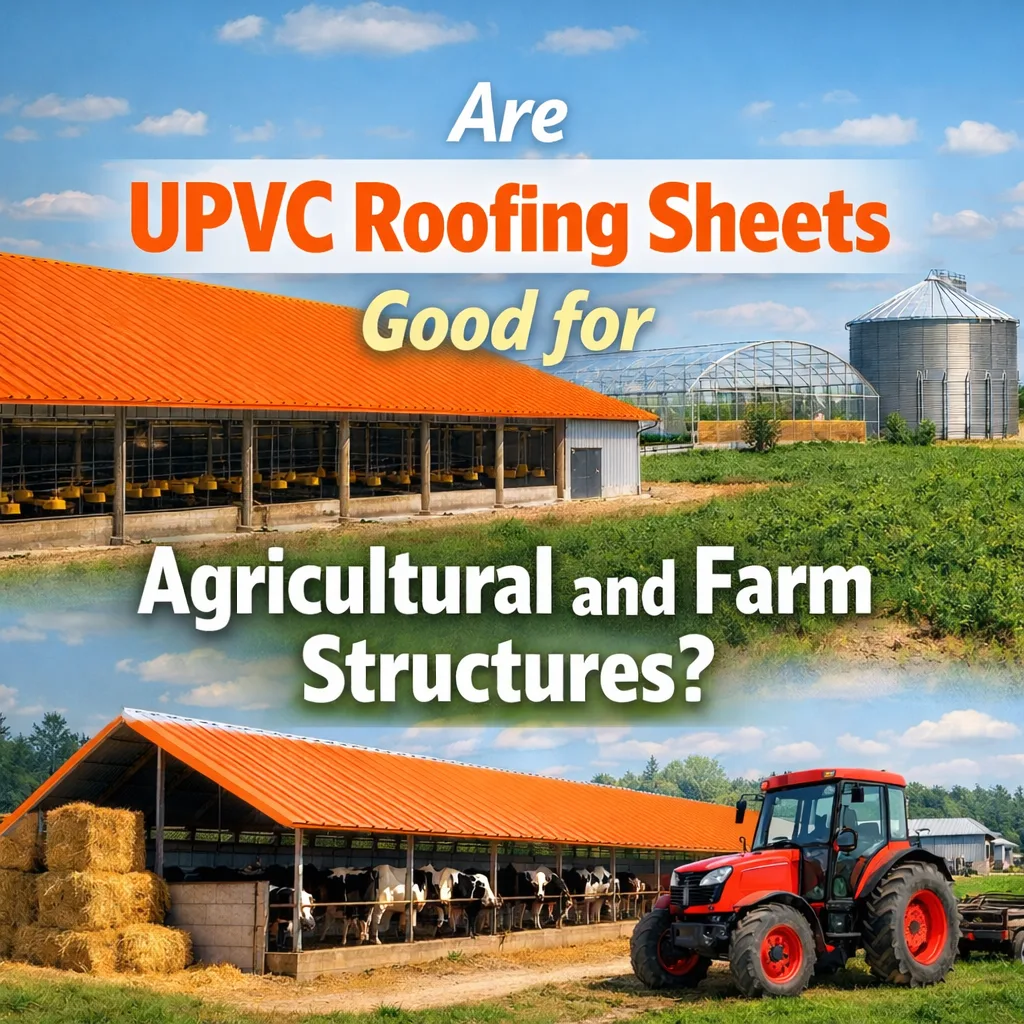
Agricultural buildings demand roofing solutions that can withstand harsh weather, humidity, chemicals, and temperature fluctuations. From poultry sheds and dairy farms to warehouses and storage barns, roofing plays a crucial role in protecting livestock, crops, and equipment. One solution gaining significant popularity is UPVC Roofing Sheets for Farm Buildings. But are they truly suitable for agricultural and farm structures? Let’s explore.
Why Roofing Matters in Agriculture
Farm structures are exposed to extreme sunlight, heavy rains, wind loads, ammonia emissions from livestock waste, and constant moisture. Traditional metal sheets often corrode due to chemical reactions, while asbestos sheets pose safety concerns. Choosing the right roofing material directly impacts:
- Animal health and comfort
- Crop storage conditions
- Energy efficiency
- Long-term maintenance costs
This is where UPVC roofing sheets stand out.
What Makes UPVC Roofing Sheets Suitable for Farms?
UPVC (Unplasticized Polyvinyl Chloride) roofing sheets are engineered to deliver durability and performance in challenging environments. Here’s why they work exceptionally well in agricultural applications:
1. Superior Chemical Resistance
Livestock farms generate ammonia and other gases that can corrode conventional metal roofing. UPVC sheets are non-corrosive and resistant to chemical reactions, making them ideal for poultry sheds, pig farms, and dairy barns.
Unlike metal roofing, UPVC does not rust, peel, or degrade due to chemical exposure. This ensures long-term structural integrity.
2. Excellent Thermal Insulation
Temperature control is critical in farm buildings, especially poultry and dairy farms where livestock productivity depends on a stable environment. UPVC roofing sheets provide natural thermal insulation, reducing heat absorption compared to metal sheets.
By maintaining cooler interiors during hot summers, they help:
- Improve animal comfort
- Reduce heat stress
- Lower dependency on cooling systems
This translates to better yield and energy savings.
3. Weather and UV Resistance
Farm buildings are usually located in open areas with direct exposure to sunlight, wind, and rain. UPVC roofing sheets are designed with UV-resistant layers that prevent cracking, fading, or brittleness over time.
They also offer:
- High wind resistance
- Strong impact strength
- Leak-proof performance
This makes them reliable even in regions prone to storms or heavy rainfall.
4. Low Maintenance and Long Lifespan
Agricultural operations already involve multiple maintenance responsibilities. Roofing should not add to the burden. UPVC roofing sheets require minimal upkeep since they:
- Do not corrode
- Resist fungal growth
- Are easy to clean
Their extended lifespan reduces replacement frequency, saving money in the long run.
Applications of UPVC Roofing Sheets in Farm Structures
UPVC roofing sheets are versatile and suitable for various agricultural applications, including:
Poultry Sheds
They maintain cooler temperatures and resist ammonia corrosion, ensuring a hygienic and durable roofing solution.
Dairy Farms
Thermal insulation helps maintain a comfortable environment for cattle, improving milk production efficiency.
Livestock Shelters
Strong, impact-resistant sheets protect animals from extreme weather conditions.
Storage Warehouses
Ideal for grain storage due to moisture resistance and temperature stability.
Greenhouses and Agricultural Units
UPVC sheets can be used in specific agricultural enclosures where durability and protection are required.
Cost-Effectiveness for Farmers
While the initial cost of UPVC roofing sheets may be slightly higher than conventional metal sheets, their long-term value is significantly greater. Savings occur through:
- Reduced maintenance expenses
- Lower cooling costs
- Longer replacement cycles
- Improved farm productivity
When calculated over 10–20 years, UPVC roofing sheets often prove more economical.
Are There Any Limitations?
Like any roofing material, UPVC sheets must be properly installed to ensure maximum performance. Poor installation can lead to leakage or wind damage. Choosing the right thickness and profile based on the structure is essential.
Additionally, selecting high-quality sheets from a trusted manufacturer ensures UV protection and durability standards are met.
Sustainability and Environmental Benefits
Sustainability is increasingly important in modern agriculture. UPVC roofing sheets contribute to eco-friendly farming by:
- Reducing energy consumption
- Offering long service life
- Being recyclable in many cases
- Eliminating hazardous materials like asbestos
This makes them a safer and greener alternative.
Final Verdict: Are UPVC Roofing Sheets Good for Agricultural and Farm Structures?
Yes, UPVC Roofing Sheets for Farm Buildings are an excellent choice for agricultural and farm structures. Their resistance to corrosion, superior thermal insulation, UV stability, and low maintenance requirements make them highly suitable for demanding farm environments.
Whether you manage a poultry shed, dairy farm, livestock shelter, or agricultural warehouse, UPVC roofing sheets provide long-term durability and performance while supporting productivity and cost efficiency.
For farmers seeking a reliable, energy-efficient, and weather-resistant roofing solution, UPVC roofing sheets are a smart and sustainable investment.

