























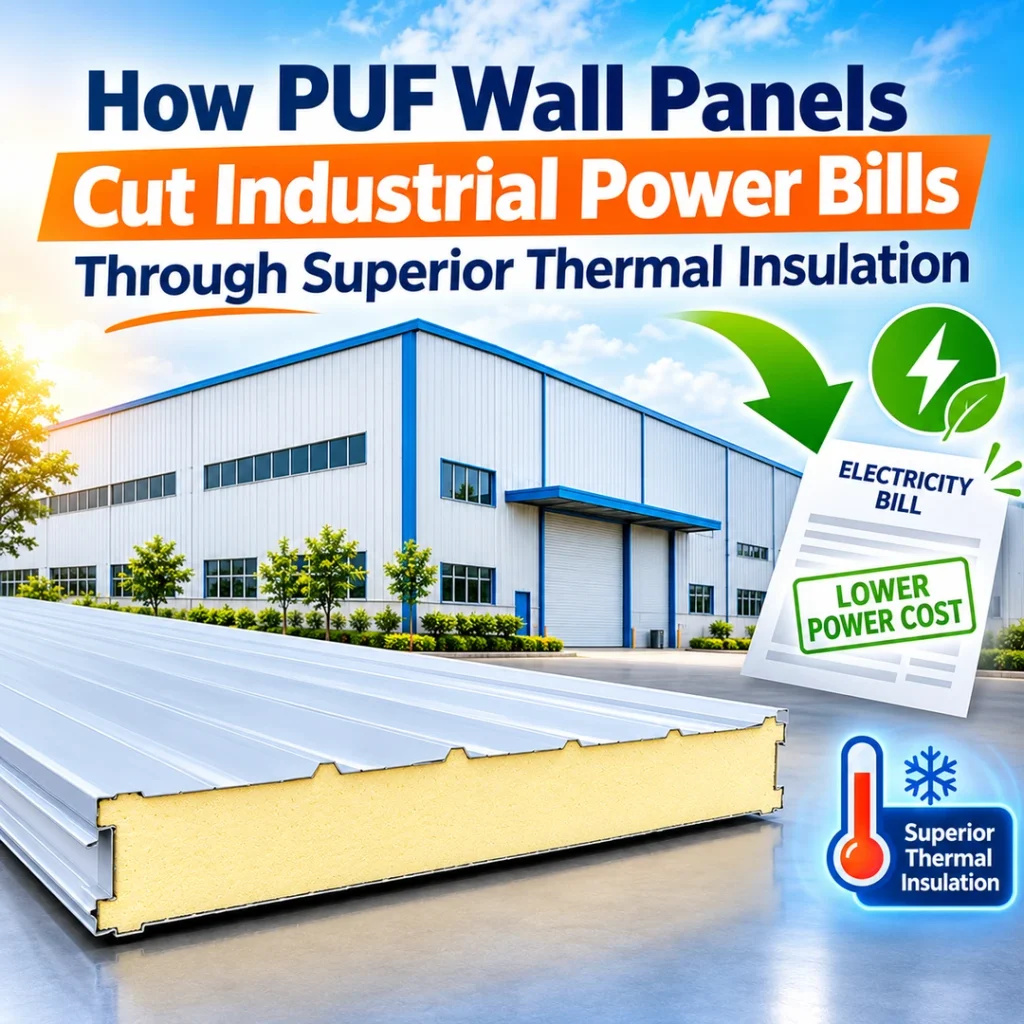
Electricity consumption is one of the major operating expenses for industrial buildings. Factories, warehouses, manufacturing plants, cold storage facilities, and commercial units often depend on air-conditioning and ventilation systems to maintain comfortable indoor temperatures. However, poorly insulated walls allow outside heat to enter during summer and conditioned air to escape, increasing the workload on cooling equipment. Over time, this can contribute to higher electricity bills and unnecessary energy consumption.
Modern construction materials offer practical ways to improve building energy efficiency. Among these solutions, PUF wall panels for industrial buildings provide effective thermal insulation through their polyurethane foam core. These insulated sandwich panels help reduce heat transfer, maintain more stable indoor temperatures, and support efficient operation of HVAC systems.
By incorporating PUF wall panels into industrial construction, businesses can improve building insulation while creating more comfortable and energy-efficient working environments.
1. Understanding Thermal Insulation in Industrial Buildings
Thermal insulation refers to the ability of a building material to slow down heat transfer between indoor and outdoor environments. Industrial buildings often have large wall surfaces that remain exposed to direct sunlight and changing outdoor temperatures.
Without proper insulation, heat can pass through conventional walls and increase indoor temperatures. During hot weather, air-conditioning systems must work harder to maintain the required temperature. This increases electricity consumption and can place additional pressure on cooling equipment.
PUF sandwich wall panels address this challenge by incorporating an insulated polyurethane foam core between two protective outer sheets. This structure creates a barrier that slows heat movement through the building envelope.
For industries operating large facilities, improving wall insulation can become an important part of long-term energy management.
2. How PUF Wall Panels Reduce Heat Transfer
Polyurethane foam (PUF) is widely used in insulation applications because of its low thermal conductivity. Its cellular structure contains small gas-filled spaces that restrict heat movement through the material.
PUF sandwich panels generally consist of three main components:
- Outer metal sheet: Provides protection and structural support.
- Polyurethane foam core: Reduces heat transfer through the panel.
- Inner metal sheet: Creates a finished interior surface and protects the insulation core.
This sandwich construction helps reduce the movement of heat from the outside environment into the building.
When installed across industrial walls with properly sealed joints, PUF panels create a more continuous insulated building envelope. This can help reduce unwanted heat gain and improve indoor temperature stability.
3. Lower HVAC Energy Consumption
Heating, ventilation, and air-conditioning systems account for a significant portion of energy consumption in many industrial facilities.
When a building has insufficient insulation, HVAC equipment must operate longer or work harder to compensate for heat entering through walls and other building surfaces.
Installing PUF wall panels for industrial buildings can reduce the heat load placed on cooling systems by slowing the transfer of external heat.
This can provide several advantages:
- Reduced cooling demand during hot weather.
- More stable indoor temperatures.
- Improved HVAC operating efficiency.
- Reduced temperature fluctuations.
- Potential long-term electricity savings.
Actual energy savings depend on building size, climate, insulation thickness, roof construction, air leakage, equipment efficiency, occupancy, and operating schedules.
4. Maintain Comfortable Working Conditions in Factories
Industrial workers often operate machinery and equipment that generate considerable heat. Combined with high outdoor temperatures, this can make factory interiors uncomfortable.
Excessive indoor heat can affect workplace comfort and make it more difficult to maintain suitable operating conditions.
PUF insulated wall panels help reduce external heat transfer, supporting more stable indoor temperatures when used as part of a properly designed building envelope.
They can be particularly useful in:
- Manufacturing facilities.
- Industrial production units.
- Warehouses and distribution centres.
- Assembly plants.
- Packaging facilities.
- Commercial workshops.
By improving insulation, businesses can create better indoor conditions while supporting more efficient cooling operations.
5. Why PUF Panel Thickness Matters for Energy Efficiency
Panel thickness plays an important role in determining thermal insulation performance.
Generally, thicker PUF panels provide greater thermal resistance when the foam properties and other specifications remain comparable. However, the correct thickness depends on the building’s temperature requirements, external climate, wall design, and intended application.
Here are some common considerations when selecting panel thickness:
| Panel consideration | Importance |
|---|---|
| Foam thickness | Influences thermal resistance |
| Foam density | Affects product properties and performance |
| Thermal conductivity | Determines how effectively heat transfer is restricted |
| Metal sheet quality | Supports panel durability and protection |
| Joint design | Helps minimize air leakage and thermal gaps |
Businesses should select panel thickness according to project requirements rather than choosing solely on initial purchase price.
6. Reduce Temperature Fluctuations in Warehouses
Warehouses often store products that require controlled indoor temperatures. External heat entering through poorly insulated walls can create temperature fluctuations that affect storage conditions.
PUF wall panels provide insulation that helps limit heat transfer and maintain more consistent indoor temperatures.
This is particularly useful for warehouses storing:
- Electronic components.
- Packaged food products.
- Industrial raw materials.
- Temperature-sensitive goods.
- Pharmaceutical supplies, where appropriate storage systems are required.
For cold storage and temperature-controlled warehouses, insulation must be designed alongside suitable ceiling panels, flooring, refrigeration systems, insulated doors, and airtight joints.
A complete insulated building envelope helps refrigeration equipment maintain the required temperature more efficiently.
7. Minimise Heat Leakage Through Proper Panel Installation
Even high-quality insulated panels may deliver poor results if installers leave gaps or improperly seal the joints.
Heat transfer can occur through poorly connected panels, unsealed openings, damaged insulation, and gaps around doors and windows.
Proper installation is therefore essential for achieving the expected thermal performance.
Important installation practices include:
- Aligning panels correctly with the supporting structure.
- Using compatible joint and sealing systems.
- Securing panels with appropriate fasteners.
- Sealing gaps around doors and windows.
- Installing suitable flashing and accessories.
- Checking joints and connections after installation.
Correct installation helps create a continuous insulated surface and reduces unwanted air movement through the building envelope.
8. Long-Term Cost Benefits of PUF Wall Panels
The initial investment in insulated wall panels may be higher than some conventional wall construction options. However, businesses should evaluate the complete lifecycle cost rather than focusing only on upfront material expenses.
PUF panels can contribute to long-term operational benefits through:
Reduced cooling demand: Better insulation can lower the amount of heat entering the building, potentially reducing air-conditioning requirements.
Lower maintenance requirements: Suitable coated panel surfaces can provide durable protection when maintained according to manufacturer recommendations.
Faster installation: Prefabricated panels can simplify construction and help reduce installation time.
Improved temperature stability: Insulated walls support more consistent indoor conditions.
Better energy management: Reduced heat transfer can support more efficient building operation.
The actual return on investment depends on local electricity tariffs, building usage, climate conditions, panel specifications, and installation costs.
9. PUF Wall Panels vs Conventional Wall Construction
Traditional brick and concrete walls are widely used in industrial buildings. However, their thermal performance depends on material composition, thickness, density, and construction methods.
PUF sandwich panels provide an integrated insulation solution with a factory-manufactured foam core.
| Feature | PUF sandwich wall panels | Conventional brick walls |
|---|---|---|
| Thermal insulation | Integrated insulated core | Depends on wall construction |
| Construction method | Prefabricated installation | On-site masonry work |
| Installation speed | Generally faster | Generally slower |
| Wall weight | Relatively lightweight | Usually heavier |
| Surface finish | Factory-finished sheets | Requires finishing |
| Maintenance | Depends on coating and installation | Depends on plaster and finish |
The best option depends on the building’s structural design, fire-safety requirements, insulation targets, budget, and intended use.
10. Industries That Benefit from PUF Wall Panel Insulation
PUF wall panels are suitable for various industrial and commercial applications where thermal insulation is important.
Manufacturing industries: Help reduce external heat transfer and support comfortable production environments.
Cold storage facilities: Provide insulated wall systems that help refrigeration equipment maintain controlled temperatures.
Food processing plants: Support temperature management in areas requiring controlled indoor conditions.
Pharmaceutical facilities: Can be incorporated into suitable controlled-temperature environments with appropriate hygiene and regulatory specifications.
Warehouses: Help reduce heat gain and support more stable indoor storage conditions.
Commercial buildings: Provide insulation for facilities seeking improved energy performance.
11. Why Choose Viraat Industries for PUF Wall Panels?
Selecting the right manufacturer is essential for obtaining reliable insulation performance and long-term value.
Viraat Industries provides PUF sandwich panel solutions for industrial, commercial, and infrastructure applications. With manufacturing experience and a focus on insulated building materials, the company supports projects requiring PUF roof and wall panel systems.
When selecting PUF wall panels for your facility, consider the following:
- Required panel thickness and thermal performance.
- Quality of the polyurethane foam core.
- Outer sheet material and coating.
- Joint configuration and installation requirements.
- Project-specific dimensions and specifications.
- Manufacturing quality and technical support.
Choosing the correct panel specification can help businesses build insulated industrial spaces that support operational efficiency and long-term performance.
Conclusion
Reducing industrial electricity consumption requires more than efficient machinery and modern cooling equipment. The building envelope also plays an important role in controlling heat transfer and maintaining indoor temperatures.
PUF wall panels for industrial buildings provide an effective insulation solution through their polyurethane foam core, which helps reduce external heat gain and supports HVAC efficiency. Their lightweight construction, prefabricated design, and thermal insulation properties make them suitable for factories, warehouses, manufacturing units, and other industrial facilities.
For businesses planning new construction or upgrading existing buildings, investing in properly specified PUF sandwich wall panels can be a practical step towards better thermal performance and more efficient energy management.
Frequently Asked Questions
PUF wall panels contain a polyurethane foam core that reduces heat transfer between indoor and outdoor environments. This helps maintain stable indoor temperatures and reduces the workload on air-conditioning systems, potentially lowering electricity consumption in industrial buildings.
PUF panels offer effective thermal insulation because their polyurethane foam core has low thermal conductivity. The foam’s cellular structure slows heat transfer, helping maintain comfortable indoor temperatures in factories, warehouses, and other industrial facilities.
The suitable PUF panel thickness depends on the building’s insulation requirements, external climate, indoor temperature targets, and application. Common thickness options include 30 mm, 40 mm, 50 mm, 60 mm, 80 mm, and 100 mm. Project-specific thermal requirements should determine the final selection.
Yes. PUF sandwich panels are suitable for many large warehouses because they offer thermal insulation, lightweight construction, and faster installation. They help maintain more stable indoor temperatures and can support better storage conditions for industrial goods and temperature-sensitive products.
PUF insulated wall panels can provide several decades of service when manufactured with quality materials, correctly installed, and properly maintained. Their lifespan depends on the foam quality, protective coating, environmental exposure, installation methods, and maintenance practices.