






















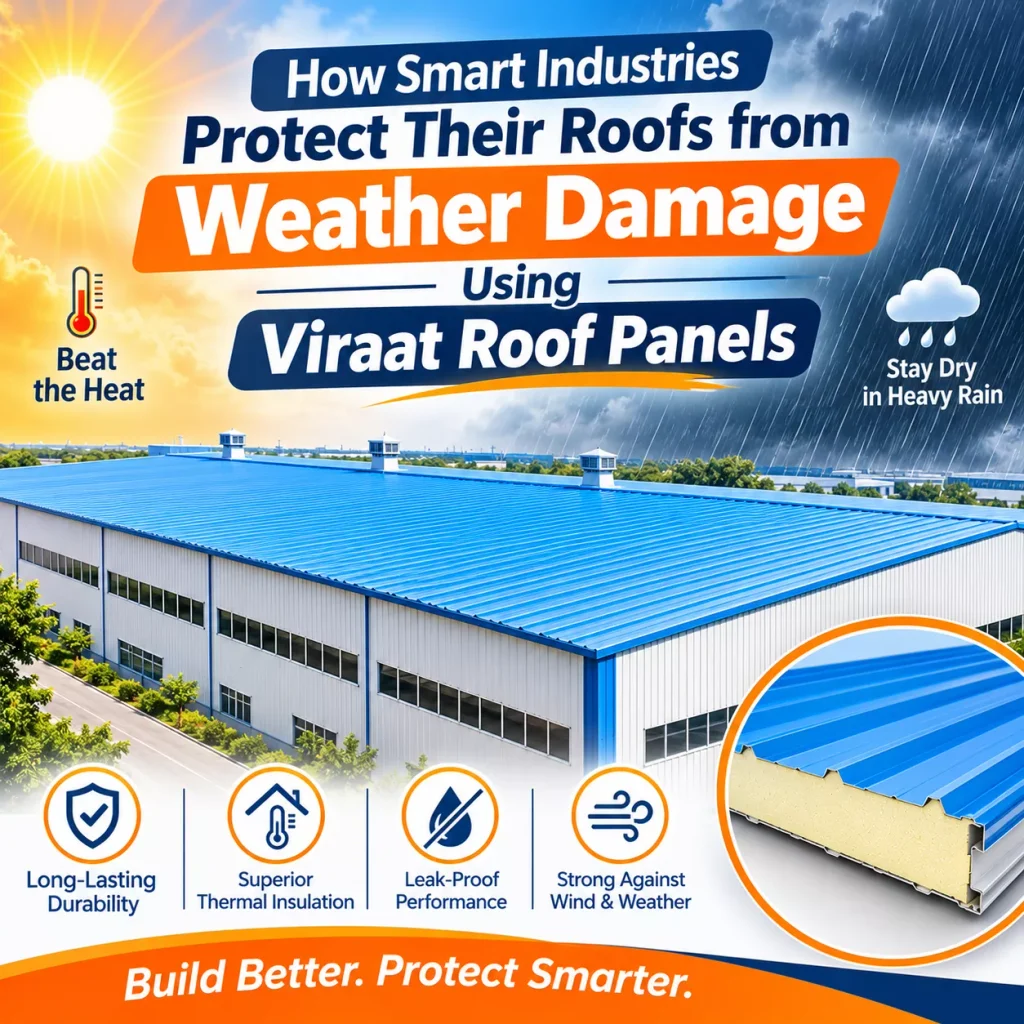
Industrial buildings face continuous exposure to changing weather conditions throughout the year. Heavy rainfall, extreme summer temperatures, strong winds, humidity and seasonal storms can gradually affect roofing systems. Roof damage can lead to water leakage, corrosion, increased indoor temperatures, equipment damage and unexpected maintenance expenses.
For manufacturing facilities, warehouses, commercial buildings and production units, protecting the roof is essential for maintaining smooth operations. This is why many industries are moving towards advanced roofing solutions that offer insulation, durability and reliable weather protection.
Viraat roof panels, including PUF sandwich roof panels, provide a practical roofing solution for industrial buildings that require thermal insulation and protection against common weather-related challenges. With the right panel specifications, installation methods and maintenance practices, industries can improve roof performance and protect their facilities for years.
1. Understanding How Weather Conditions Damage Industrial Roofs
Industrial roofs are exposed to different environmental conditions depending on their location and climate. Traditional roofing materials may experience problems when they are not designed or maintained for the surrounding weather conditions.
During heavy rainfall, poorly sealed joints and damaged roofing sheets can allow water to enter the building. Continuous exposure to sunlight can increase indoor temperatures and affect workplace comfort. High humidity can also contribute to corrosion in unsuitable metal roofing systems.
Strong winds may loosen improperly secured roofing sheets, while repeated temperature changes can place stress on roofing joints and connections.
These problems can interrupt industrial activities, damage stored materials and increase repair costs. Choosing an appropriate roofing system helps industries reduce these risks and improve building protection.
2. How Viraat Roof Panels Help Protect Against Heavy Rainfall
Water leakage is one of the most common challenges faced by industrial buildings during the monsoon season. Even small gaps between roofing sheets, loose fasteners or poorly installed flashing components can become entry points for rainwater.
PUF sandwich roof panels are manufactured with an insulated core between protective outer metal sheets. Their panel design provides a continuous roofing surface when installed according to the recommended jointing and fixing procedures.
Properly connected panels, compatible sealants, suitable fasteners and correctly installed flashings help reduce the possibility of water infiltration.
For better rain protection, industries should pay attention to:
- Correct roof slope for water drainage.
- Proper panel alignment and joint connections.
- Suitable fasteners and sealing materials.
- Correct installation of ridge and edge flashings.
- Effective gutter and drainage arrangements.
- Regular inspection of vulnerable roof areas.
Viraat roof panels can help industries develop roofing systems designed to withstand demanding weather conditions when supported by professional installation.
3. Reduce Indoor Heat with Advanced Thermal Insulation
High summer temperatures can make industrial buildings uncomfortable and increase the demand for cooling systems. Metal roofs exposed directly to sunlight can transfer significant heat into the building if they lack suitable insulation.
PUF sandwich roof panels feature a polyurethane foam core that provides excellent thermal insulation and helps reduce heat transfer. This core has low thermal conductivity, which helps reduce heat transfer through the roofing assembly.
By limiting heat movement through the roof, insulated panels can support more stable indoor temperatures and reduce the cooling load on air-conditioning systems.
This can be particularly useful for:
- Manufacturing plants.
- Industrial warehouses.
- Logistics and distribution centres.
- Commercial buildings.
- Production and assembly facilities.
- Agricultural and processing units.
With appropriate panel thickness and correct installation, Viraat PUF roof panels can contribute to improved thermal comfort and building energy efficiency.
4. Improve Roof Durability Against Changing Weather Conditions
Industrial roofing materials must withstand continuous environmental exposure. Sunlight, rainfall, humidity and temperature fluctuations can gradually affect the condition of roofing surfaces.
Viraat PUF sandwich roof panels combine protective metal facings with an insulated core. The outer surface provides protection for the panel assembly, while the insulated core supports thermal performance.
The durability of the roofing system depends on the quality of the metal coating, panel specifications, structural support, fastening system and environmental exposure.
Industries should select appropriate panel materials and protective coatings based on their operating location and expected weather conditions.
Choosing suitable roofing specifications can help reduce premature deterioration and support long-term building performance.
5. Protect Industrial Operations from Moisture-Related Problems
Water entering through damaged roofing can affect machinery, electrical installations, stored products and interior infrastructure. In industries that handle sensitive materials, moisture-related damage can result in significant financial losses.
A properly designed PUF roofing system can help reduce the risk of rainwater entering through panel joints and roof connections.
However, roof protection requires more than the panel itself. Correct joint sealing, flashing installation, drainage design and regular inspections are equally important.
Industries should also inspect areas around skylights, ventilation openings, roof penetrations and wall connections because these locations may require additional waterproofing attention.
Viraat roof panels offer a practical option for businesses looking to improve their roofing systems and manage common moisture-related challenges.
6. Why Proper Installation Matters for Weather Protection
Even high-quality roofing panels may underperform when installation is not carried out correctly. Poor alignment, incorrect fastener placement, damaged panel edges and incomplete sealing can create weak points in the roofing system.
Professional installation helps ensure that every panel is positioned and secured according to the manufacturer’s recommendations.
Important installation practices include:
- Inspecting the supporting purlins and structural framework.
- Checking roof measurements and panel dimensions.
- Positioning the first panel with accurate alignment.
- Using suitable fasteners and fixing patterns.
- Connecting adjacent panels correctly.
- Sealing joints and vulnerable roof connections.
- Installing suitable ridge caps, flashings and gutters.
- Inspecting the completed roof before handover.
Following these steps helps create a properly assembled roofing system with improved resistance to common weather-related problems.
7. Reduce Long-Term Roofing Maintenance Requirements
Frequent roof repairs can increase maintenance expenses and interrupt industrial operations. Leakage complaints, damaged sheets, loose fasteners and deteriorated joints may require repeated attention when the roofing system is not properly designed or maintained.
Selecting durable insulated roofing panels can help reduce some common maintenance challenges.
PUF sandwich roof panels are designed to combine roofing protection and thermal insulation within a single panel system. This integrated construction can simplify the roofing assembly compared with systems that require separate insulation layers.
To maintain good performance, industries should periodically inspect fasteners, joints, coatings, gutters, flashings and drainage outlets.
Early identification of minor problems can prevent them from developing into expensive repairs.
8. Applications of Viraat Roof Panels Across Industries
Different industries require roofing solutions that match their building design, operating conditions and environmental exposure.
Viraat roof panels can be considered for various industrial and commercial applications, including:
Manufacturing Facilities: Insulated roofing helps manage indoor heat and supports comfortable working environments.
Warehouses: Suitable roofing systems help protect stored inventory and building interiors from weather exposure.
Food Processing Units: Insulated roofs can support temperature management when integrated into an appropriately designed facility.
Cold Storage Facilities: Specialised insulated roofing assemblies help reduce unwanted heat transfer and support refrigeration efficiency.
Commercial Buildings: PUF roof panels offer an option for businesses seeking insulated roofing with a modern industrial appearance.
Prefabricated Buildings: Lightweight insulated roofing systems can be incorporated into suitable prefabricated structures.
Panel selection should always consider the specific requirements of each application.
9. What Should Industries Check Before Choosing Roof Panels?
Selecting the right roofing material requires evaluating several technical and practical factors. Industries should avoid choosing roofing panels based only on their initial purchase price.
Before selecting Viraat roof panels, consider:
- Panel Thickness: Choose according to thermal insulation and project requirements.
- Metal Sheet Quality: Check the base material, coating and protective finish.
- Insulation Performance: Evaluate the insulation core and its thermal conductivity.
- Joint Design: Ensure the panel connections suit the roof configuration.
- Weather Exposure: Consider rainfall, temperature, wind conditions and humidity.
- Structural Compatibility: Confirm that the supporting framework meets the required design specifications.
- Installation Quality: Work with experienced installation professionals.
- Maintenance: Understand the inspection and upkeep requirements.
A well-planned selection process helps industries achieve better roofing performance and long-term value.
10. Why Choose Viraat Industries for Industrial Roofing Solutions?
Choosing the right roofing manufacturer is an important decision for any industrial construction project. Businesses need a supplier that understands different roofing applications, panel specifications and project requirements.
Viraat Industries offers PUF sandwich roof and wall panel solutions for industrial, commercial and prefabricated building applications.
With 39 years of industry experience, Viraat Industries focuses on delivering roofing and insulation solutions supported by modern manufacturing capabilities and product expertise.
Its fully automatic continuous production lines support consistent manufacturing, while its production capacity of 5 lakh+ sq. ft. per month helps serve different project requirements.
From industrial warehouses and manufacturing plants to commercial buildings and specialised facilities, Viraat Industries provides roofing solutions designed to meet varied construction needs.
Businesses can explore suitable panel specifications based on their building requirements, environmental conditions and installation plans.
Conclusion
Weather damage can create serious challenges for industrial buildings, from roof leakage and excessive indoor heat to moisture-related deterioration and maintenance expenses. Selecting the right roofing system is therefore an important part of protecting industrial infrastructure.
Viraat roof panels, particularly PUF sandwich roof panels, offer a combination of thermal insulation, protective metal facings and prefabricated construction. When selected with suitable specifications and installed correctly, they can help industries improve weather protection, manage indoor temperatures and support long-term roofing performance.
For businesses planning a new industrial building or upgrading an existing roof, investing in a suitable insulated roofing solution can be a valuable step towards stronger and more efficient infrastructure.
Choose Viraat Industries for advanced PUF sandwich roof and wall panel solutions. Build better, protect smarter and prepare your industrial facility for changing weather conditions.