

















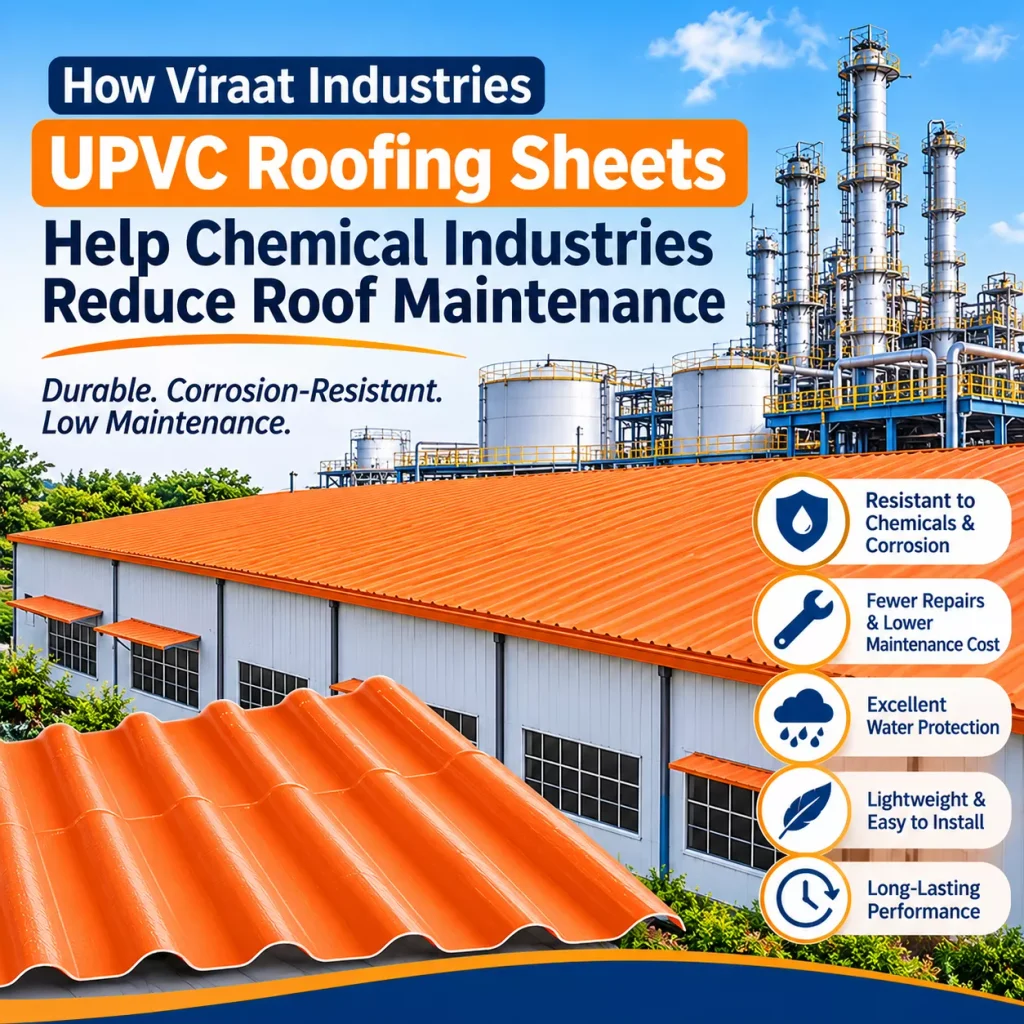
Chemical manufacturing facilities operate in demanding environments where roofing systems face continuous exposure to heat, moisture, chemical fumes, industrial pollutants and changing weather conditions. These conditions can gradually damage conventional roofing materials, resulting in corrosion, leakage, frequent repairs and increased maintenance expenses. Choosing the right roofing material is therefore essential for maintaining a safe and efficient industrial facility.
UPVC roofing sheets offer a practical alternative for industrial buildings that require durable and low-maintenance roofing solutions. Their resistance to moisture, corrosion and several environmental conditions makes them suitable for many industrial applications. Viraat Industries provides UPVC roofing solutions designed to support the roofing requirements of modern industrial facilities, including chemical processing plants and manufacturing units.
Let’s explore how UPVC roofing sheets can help chemical industries reduce recurring roof maintenance and improve long-term building performance.
1. Resistance to Corrosion in Industrial Environments
Corrosion is one of the common challenges faced by chemical industries. Industrial operations may release fumes, vapours and other substances that can affect exposed building materials. Traditional metal roofing sheets may gradually develop corrosion when their protective coatings become damaged or when they encounter unsuitable chemical environments.
UPVC roofing sheets are made from unplasticized polyvinyl chloride, a material that does not rust like conventional metal roofing. This property helps reduce corrosion-related deterioration in suitable industrial applications.
By selecting appropriate UPVC roofing sheets, chemical facilities can reduce maintenance requirements associated with rust formation, peeling protective coatings and corrosion-related damage. However, compatibility with specific chemicals, concentrations and operating temperatures should always be verified before installation.
2. Reduced Maintenance and Repair Requirements
Frequent roof inspections, repairs and replacement activities can interrupt industrial operations. Chemical manufacturing facilities often operate on demanding production schedules, making unnecessary maintenance work inconvenient and expensive.
One advantage of UPVC roofing sheets is their ability to withstand moisture and several common environmental conditions without developing rust. Unlike conventional metal sheets, they do not require regular anti-rust treatments to protect against oxidation.
When installed correctly and used under suitable conditions, UPVC roofing sheets can reduce the need for corrosion-related maintenance. This allows facility managers to spend less time arranging roof repairs and more time focusing on production activities.
3. Protection Against Moisture and Rainwater
Water leakage is another major concern for chemical processing facilities. Rainwater entering through damaged roofing joints can affect machinery, electrical installations, raw materials and finished products.
UPVC roofing sheets provide a water-resistant roofing surface that helps protect industrial buildings against rainfall. Their performance depends on correct sheet alignment, suitable overlaps, proper fasteners and appropriate sealing accessories.
A professionally installed roofing system helps minimise water entry through joints and vulnerable roof sections. This is particularly important for chemical plants that store moisture-sensitive materials or operate expensive production equipment.
4. Better Performance Under Changing Weather Conditions
Industrial roofs remain exposed to sunlight, heavy rainfall, wind and seasonal temperature variations throughout the year. Continuous exposure can gradually affect roofing materials, especially when they are not designed for the surrounding environmental conditions.
Quality UPVC roofing sheets are designed to withstand several common outdoor conditions. Their lightweight construction also reduces the load placed on the supporting roof framework compared with many heavier roofing alternatives.
For chemical industries operating in regions with intense summer temperatures and seasonal monsoons, selecting suitable roofing materials can help reduce weather-related maintenance concerns.
The sheet specifications, thermal expansion requirements and installation methods should be checked to ensure reliable performance under local weather conditions.
5. Lightweight Construction Reduces Structural Stress
Roofing material weight plays an important role in industrial building design. Heavy roofing systems place additional loads on supporting structures, including purlins, trusses and other framework components.
UPVC roofing sheets offer a lightweight alternative that can help reduce the dead load of the roofing system. This can be beneficial for industrial buildings where structural efficiency is an important consideration.
Their manageable weight can also simplify transportation, handling and installation. Proper support spacing and fixing arrangements remain essential to maintain roof stability and prevent damage during strong winds or other challenging conditions.
6. Lower Long-Term Roofing Maintenance Expenses
The initial purchase price is not the only factor chemical industries should consider when selecting roofing materials. Maintenance labour, protective coatings, repair materials, production interruptions and replacement expenses also contribute to the overall roofing cost.
Conventional roofing materials that experience corrosion may require periodic painting, surface treatment and repair work. These activities can increase maintenance expenses over the operational life of a building.
UPVC roofing sheets can help reduce certain recurring expenses because they do not rust and generally require less corrosion-related treatment.
Although actual savings depend on the building environment, installation quality and product lifespan, evaluating the total cost of ownership can help industries make a more informed roofing investment.
7. Easy Cleaning and Routine Maintenance
Industrial roofs can accumulate dust, airborne particles and environmental deposits over time. Chemical manufacturing facilities may also experience residue accumulation depending on their operations and surrounding environment.
UPVC roofing sheets have relatively smooth surfaces that can make routine cleaning easier. Regular inspection and cleaning help facility teams identify potential problems before they become expensive repairs.
A basic maintenance schedule should include checking roof joints, fasteners, flashing, drainage points and visible surface damage. Cleaning should follow suitable manufacturer recommendations, particularly where industrial chemical residues are present.
Avoid using aggressive cleaning chemicals unless their compatibility with the roofing material has been confirmed.
8. Suitable for Different Industrial Roofing Applications
Chemical industries operate across different manufacturing sectors, and their buildings have varying roofing requirements. Production halls, storage facilities, utility areas, workshops and covered loading spaces may all require suitable roofing systems.
UPVC roofing sheets can be considered for applications such as:
- Chemical manufacturing units
- Industrial warehouses
- Processing and production facilities
- Raw material storage areas
- Covered loading and unloading zones
- Factory extensions and utility buildings
- Industrial workshops
The correct sheet profile, thickness, support arrangement and chemical compatibility should be evaluated according to the intended application.
9. Why Choose Viraat Industries for UPVC Roofing Solutions?
Selecting a dependable roofing supplier is an important step in reducing long-term maintenance concerns. Viraat Industries offers roofing and insulation solutions for residential, commercial and industrial construction requirements.
Our UPVC roofing sheets are suitable for projects where lightweight construction, weather resistance and reduced corrosion-related maintenance are important considerations.
Whether you are planning a new chemical manufacturing facility, expanding an existing production unit or replacing an ageing industrial roof, selecting the right roofing specification can make a significant difference to long-term performance.
Viraat Industries focuses on providing practical roofing solutions that support different project requirements. Our team can help customers evaluate suitable roofing options based on application, building conditions and installation requirements.
Conclusion
Maintaining an industrial roof in a chemical processing environment requires careful material selection. Corrosion, moisture, weather exposure and repeated repair activities can increase operational expenses when unsuitable roofing materials are used.
UPVC roofing sheets provide an alternative for suitable industrial applications because of their lightweight construction, resistance to rust and relatively low maintenance requirements. With proper material selection, professional installation and routine inspection, they can help chemical industries manage roofing maintenance more efficiently.
Choose Viraat Industries for suitable UPVC roofing solutions and explore roofing options designed to support the long-term requirements of modern industrial facilities.