


















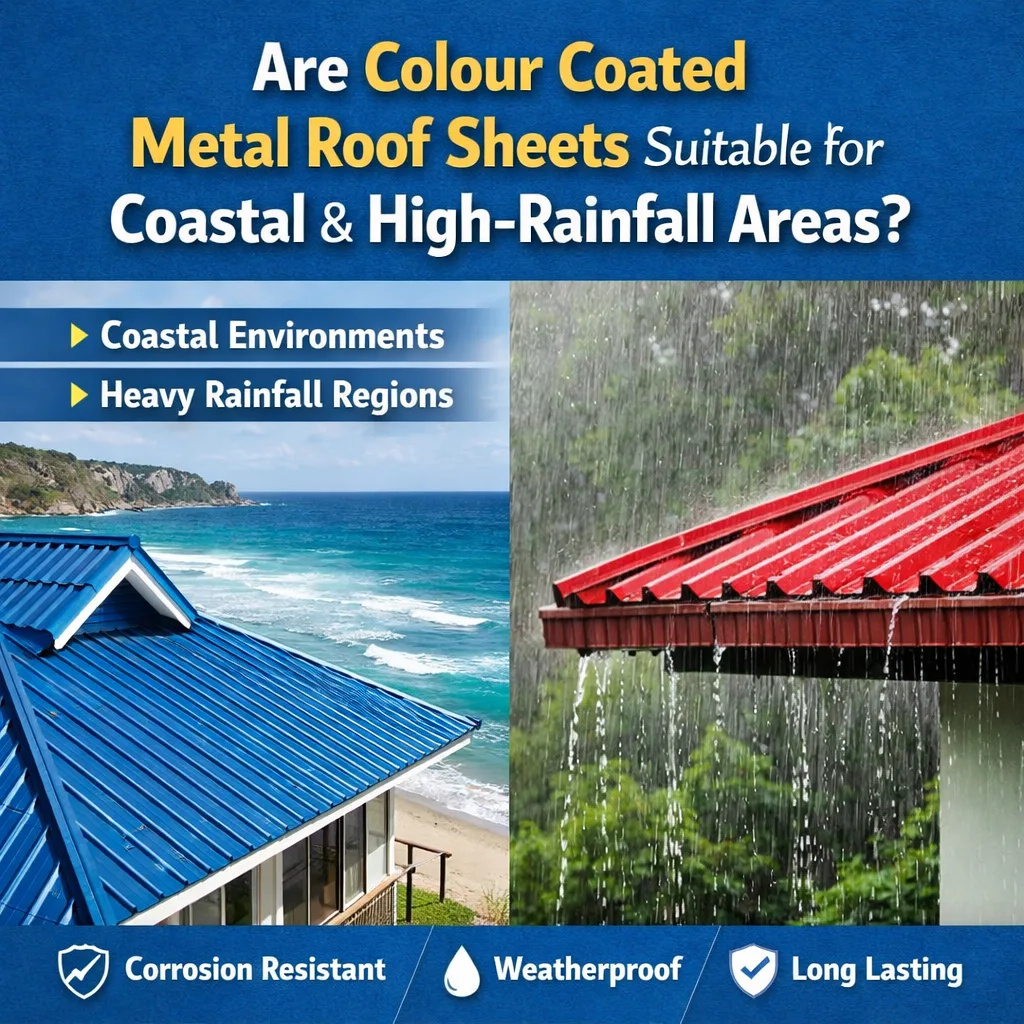
When choosing roofing materials for buildings located in coastal or high-rainfall regions, factors such as corrosion resistance, water tightness, durability, and long-term maintenance become crucial. For areas exposed to salty sea breeze, constant humidity, heavy rainfall, or severe monsoon conditions, selecting the right roof can make a significant difference in performance, safety, and structural lifespan. This leads many buyers to ask an important question: Are colour-coated metal roof sheets suitable for coastal or high-rainfall areas?
The short answer is yes, colour-coated metal roof sheets are suitable for these environments — provided you choose the right base metal, coating system, and installation practices. Below, we explore why they perform well in such conditions, what buyers should consider, and how to maximise durability in challenging climates.
Understanding the Environmental Challenges
Before evaluating performance, it’s important to understand what coastal and high-rainfall areas expose roofing materials to:
Coastal Area Challenges
✔ High moisture levels
✔ Salty chloride particles in the air
✔ Constant humidity and wind-driven rain
✔ Faster corrosion and rust formation
✔ Increased surface degradation due to salt attack
High-Rainfall Region Challenges
✔ Prolonged water exposure
✔ Roof leakage risks
✔ Fungal growth and staining
✔ High humidity and condensation
✔ Structural fatigue due to heavy downpours
These conditions demand roofing materials that are corrosion-resistant, weatherproof, and structurally durable.
Why Colour Coated Metal Roof Sheets Perform Well
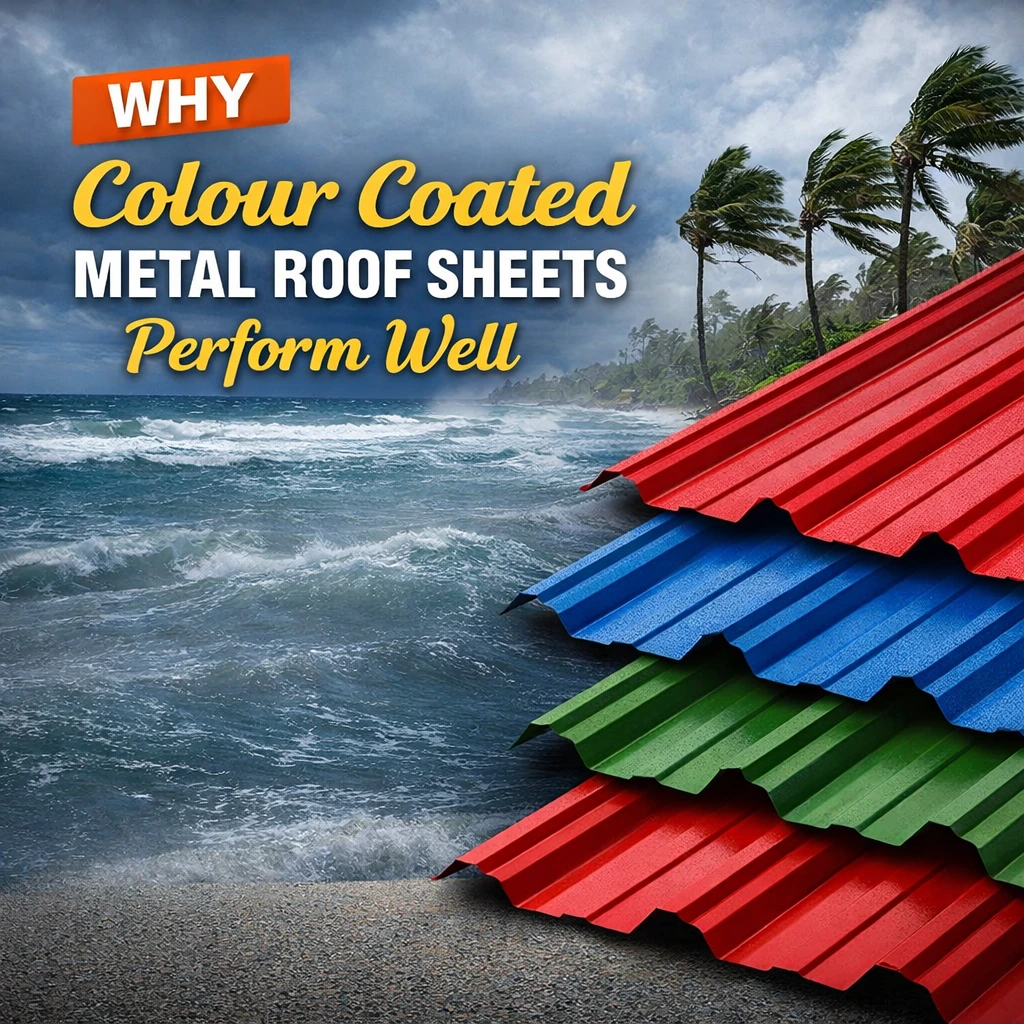
Colour-coated metal roof sheets are manufactured from base metals such as Galvanised (GI), Galvalume (AZ), Aluminium, or Zinc-coated steel, which are then coated with advanced paint systems like PE, SMP, PVDF, or Polyester. These layers act as both chemical and weather barriers.
Corrosion Resistance
Coastal and rainy regions require roofing materials that resist rust. Colour-coated metal roofing sheets offer this benefit due to:
- Zinc, Aluminium, or Zinc-Aluminium coatings
- Anti-corrosion paint layers
- Barrier protection from moisture and salt
- Self-healing properties (in AZ coatings)
Among these, Galvalume-coated metal sheets (AZ150 or AZ200) are particularly recommended for marine environments because the aluminium coating resists chloride-induced corrosion far better than plain galvanised steel.
Superior Waterproofing
Colour-coated roofing sheets are designed with profiles that quickly drain water, preventing pooling and leakage. Their interlocking systems and anti-capillary groove designs further enhance waterproofing.
UV and Weather Protection
High-performance paint layers (especially PVDF) with stand:
- UV radiation
- Acid rain
- High humidity
- Algal growth
- Temperature fluctuations
This ensures longer aesthetic and structural performance in coastal tropical climates.
Types of Coatings Suitable for Coastal & Rain-Heavy Areas
The performance of colour-coated metal roof sheets depends heavily on their coating type. Here are the best options for harsh environments:
a) Galvalume (AZ) Coating
Ideal for coastal zones due to:
✔ Excellent corrosion resistance
✔ High heat reflectivity
✔ Longer lifespan compared to GI
Look for AZ150 or AZ200 grade for marine use.
b) PVDF Paint Coating
PVDF-coated sheets offer:
✔ Superior UV resistance
✔ Colour retention for decades
✔ Anti-fade performance
✔ Protection against chemicals & humidity
Preferred for seaside resorts, industrial sheds, and luxury homes.
c) SMP (Silicon Modified Polyester)
Provides:
✔ Better weather performance than regular polyester
✔ Suitable for moderately coastal climates
Installation Practices That Improve Lifespan
Even the best roofing sheet can fail if installed incorrectly.
For coastal and monsoon-prone regions:
✔ Use stainless steel or coated fasteners
✔ Ensure correct slope and drainage
✔ Seal all joints with weather-resistant sealants
✔ Avoid cutting sheets with abrasive tools (reduces edge corrosion)
✔ Maintain proper ventilation to reduce condensation
Regular cleaning of salt deposits also extends lifespan, especially for buildings within 5–10 km of the shoreline.
Lifespan & Maintenance Expectations
With proper selection and installation, colour-coated metal roof sheets can last:
- 20–40 years in high-rainfall areas
- 15–35 years in coastal zones (depending on proximity to sea)
- Up to 50+ years with high-grade AZ + PVDF systems
Maintenance requirements are minimal compared to asbestos or clay tiles.
Cost Efficiency & Value Benefits
Many buyers assume metal roofing is expensive, but it offers excellent long-term value, especially in harsh climates.
Benefits include:
✔ Lower maintenance cost
✔ Reduced replacement frequency
✔ Higher structural strength
✔ Resistance to moss, termites & fungus
✔ Faster installation
✔ Lightweight design reduces load on the building
Compared to traditional roofing alternatives such as asbestos, concrete tiles, or fibre sheets, colour-coated metal roofing sheets offer superior performance and a better lifecycle cost advantage.
Where Are They Commonly Used?
Due to their resistance to extreme climatic conditions, these sheets are widely used in:
- Coastal warehouses & factories
- Resorts & beach villas
- Ports & shipyards
- Agricultural sheds
- Residential homes
- Commercial buildings
- Food processing units
- High rainfall industrial zones
Conclusion
Are Colour-coated metal roof sheets suitable for coastal or high-rainfall areas?
Yes — absolutely, provided the correct base metal, coating system, and installation method are chosen. Their corrosion resistance, waterproofing capability, UV stability, and long service life make them a reliable and cost-effective roofing solution for harsh climatic environments.
To maximise performance in coastal applications, Galvalume sheets with PVDF coating are highly recommended, while GI or AZ-coated sheets with SMP paint are suitable for heavy monsoon zones.
Ultimately, selecting the right roofing material ensures your building stays protected, efficient, and aesthetically appealing for decades.
Frequently Asked Questions
Yes — when made with corrosion-resistant base metals like Galvalume (aluminium-zinc) and protective paint coatings, these sheets form a barrier against moisture and salt spray, helping them withstand coastal conditions.
PVDF (Polyvinylidene Fluoride) paint coatings and higher-grade Galvalume (e.g., AZ150 or AZ200) are particularly effective in coastal locations because they offer superior UV resistance, colour retention, and corrosion protection.
Yes — the profiled design and interlocking systems of colour-coated sheets promote fast drainage and waterproofing, reducing the risk of water pooling and leakage during heavy monsoon rains.
With the right materials and professional installation, they can last approximately 15–35 years in coastal zones, and up to 40+ years in high-rainfall regions with proper maintenance.
Yes — using corrosion-resistant fasteners such as stainless steel or specially coated screws helps improve roof durability in salty and humid environments by preventing rust at attachment points.
While generally low-maintenance, roofs in coastal areas benefit from periodic cleaning to remove salt deposits and debris, which helps extend their service life and preserve performance.